


Thank you for reading Between the Layers! Please enjoy and share this free post with your friends. Who Needs Potpourri? Bake Fall Cookies - No. 249Oatmeal, molasses, and peanut butter are all flavors I crave this time of year + Barbara’s Oatmeal Raisin Cookie recipe.
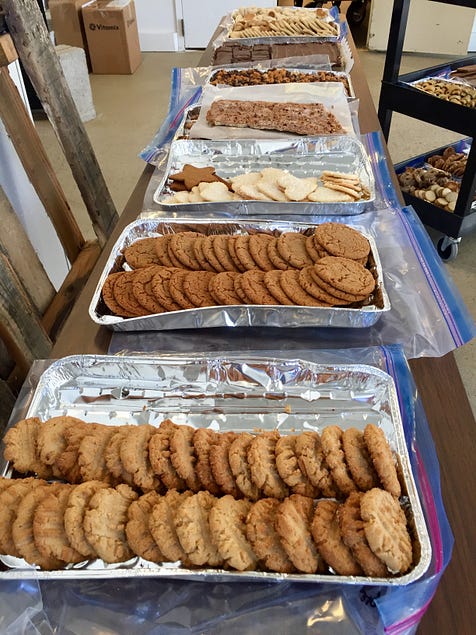
THIS PAST SATURDAY I WAS INVITED to speak about American baking at a meeting of The Jewish Historical Society of South Carolina in Columbia. That morning, we awakened to the news of the Hamas invasion of Israel. On a table at the back of the meeting room were trays of homemade cookies—rugelach from the ladies at the Beth Shalom synagogue, Sandra Polikaff’s sugar cookies dusted with cinnamon, and Lyssa Harvey’s chocolate meringue cookies. With a warm cup of tea or coffee, these cookies offered comfort to everyone in the room stunned by the tragic news. Cookies couldn’t do anything about a volatile Middle East conflict, and but they could offer familiarity and maintain traditions. The coastal South has a deep Jewish heritage, and congregations were founded in Savannah in 1735 and Charleston in 1749. By 1800, more Jews lived in Charleston than New York City. While I had already planned to write about cookies in this newsletter, those bites of Jewish history on the back table, many of them recipes from the book Kugels & Collards, gave me that extra push.
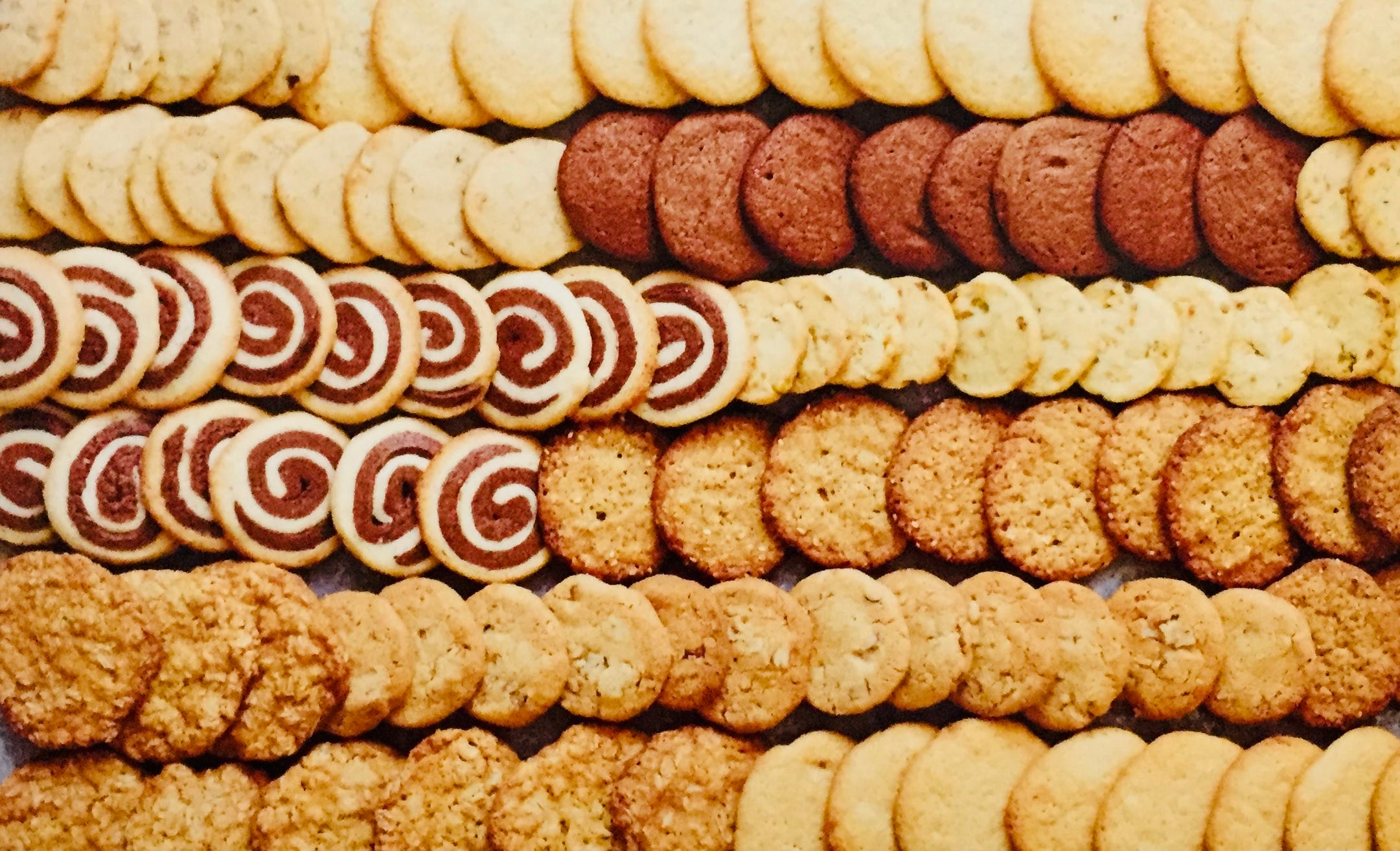
Cookies bring people togetherFall is when I crave the cookies of molasses, oatmeal raisin, and peanut butter that I don’t bake in the summertime. I want to smell them baking and fill my house with cinnamon, butter, and love. These are not cookies I usually bake for the Christmas holidays either. They’re simpler and need no rolling and cutting, sprinkles or fuss, or any advance planning. Like Chocolate Chip Cookies, you just drop them on a baking sheet, and everyone thinks you’re wonderful. When I wrote the book American Cookie, I thought perhaps that cookies might hold the same rich stories as cakes. But cakes and cookies couldn’t have been more different. While cakes are celebratory, privileged, and time-consuming, cookies are for young and old, don’t need a reason to be baked, are made with what’s in your cupboard, and are forgiving when it comes to substitutions. They fill you up if you’re hungry, fit into the palm of a hand, and the cookie you bake says something about you.
Molasses cookies are forgivingThey might be called Joe Froggers or Cry Babies or Stage Planks or just molasses cookies and tell about a time when white sugar wasn’t available, was rationed, or was considered ‘’slave sugar’’ and not used. They likely descended from the cookie recipes brought to America with European immigrants and took on flavors of their own with new ingredients, religious practices, ovens, new jobs or no jobs, a rural or urban life, and they morphed into something all their own on family recipe cards we still use today. Molasses, sorghum, or maple syrup—they all work in these drop cookies leavened with baking soda. And they have the most beautiful texture that is entirely in your hands. They are chewy if under-baked a bit but crispy if you let them linger longer in the oven. (I imagine they were very crispy and oh so delicious when baked in a wood-fired oven!) When I make Grandma Hartman’s Molasses Cookies from my book, I am reminded of this old Mennonite recipe and Mary Rebecca Ogburn Hartman’s great-granddaughter who once told me these cookies perfume inside and outside the house. ‘‘They didn’t have air conditioning so the smells burst through the windows and open doors.’’ The recipe goes something like this: Beat 1 cup sugar and 3/4 cup vegetable shortening (or 1 stick butter, softened) until creamy. Add 1/4 cup molasses or sorghum plus 1 large egg and combine. Add 2 cups all-purpose flour mixed with 2 teaspoons baking soda, 1 teaspoon cinnamon, 1/2 teaspoon ginger, and 1/2 teaspoon salt. Chill the dough 1 to 2 hours. Then drop the dough in 1-inch pieces onto a plate with 1/4 cup sugar. Roll them around and place on baking sheets, then flatten with the bottom of a juice glass. Bake at 350ºF for 6 1/2 to 7 1/2 minutes for soft cookies and 8 to 9 minutes for crispier ones. Makes four dozen.
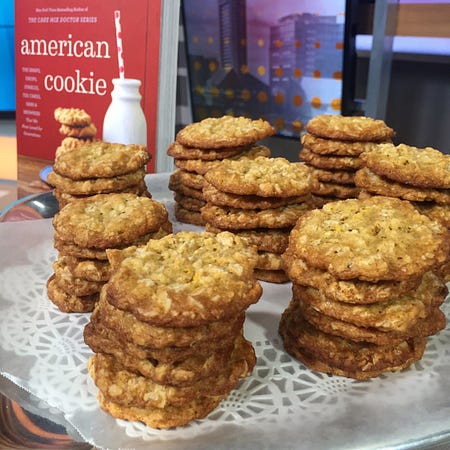
Oatmeal cookies came out of harder timesLong before the first oatmeal cookies were shared in the 1880s, clever grandmas knew oats could stretch recipes and make them healthier. But World War I rationing of wheat flour really thrust oatmeal cookies to the forefront as they became patriotic and supported a war effort by saving wheat flour for the troops. The oatmeal recipe on the back of the Quaker Oats box has been around since 1939, but my favorite oatmeal cookie comes from my brother-in-law’s aunt Barbara in South Carolina. I have baked it for nearly 20 years, and it is my go-to. These are perfect and flawless oatmeal cookies and easily adapted to what you have or your pickiest eaters. But here’s the trick: You must place the dough in the fridge to rest at least an hour or preferably overnight so they bake up beautifully. We know now this is just giving the dough time to hydrate. Back then it was probably time saving. You could make the dough and bake them later.
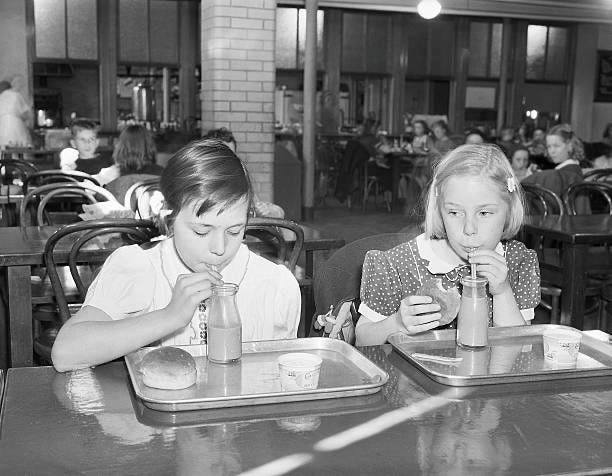
Don’t diss the cafeteria. Peanut butter cookies were born there.In the 1930s as farmers faced financial ruin due to price collapses on their commodities, and as parents were out of work and children hungry, the U.S. government stepped in to help with the federally supported lunch program. The government purchased surplus crops from farmers and fed children a hot meal, and the effort also employed thousands of women to cook in the lunchrooms. These lunch ladies could bake with lower-cost shortening instead of butter. And these inexpensive peanut butter cookies, something of childhood memory, were shelf-stable and could be stored at room temp. One of my favorite peanut butter cookie recipes goes like this: Beat 1/2 cup each peanut butter and shortening (or butter) with 1/2 cup each light brown sugar and white sugar until creamy. Add a smidge of vanilla and 1 large egg and beat until smooth. Add 1 1/2 cups sifted all-purpose flour mixed with 1 teaspoon baking soda and 1/2 teaspoon salt. Drop by 1-inch pieces onto baking pans. Press each ball twice with a fork dipped into white sugar, creating a crosshatch pattern. Bake at 375ºF until lightly browned, 10 to 12 minutes. What are your favorite cookies to bake in the fall?Driving home from South Carolina, listening to the unsettling news of the Middle East, I realize there is little I can do to bring world peace. But I can pray for more peaceful times, and I can write about cookies and how people through time have adored them especially when they’re easy to make, don’t cost a lot, perfume the house, and can be shared and remembered. Have a great week! - xo, Anne
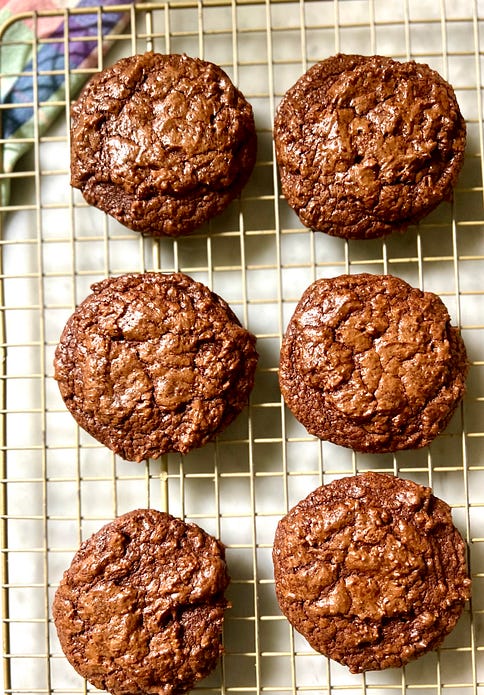
Coming Thursday for paid subscribers, one more cookie!I’ve been on a quest to bake an ooey-gooey chocolate drop cookie that’s chewy like a brownie but sturdy like a cookie, and I think I’ve found it. Yum! Not a paid subscriber? Join us! These free posts appear every other Tuesday. So don’t miss a single recipe plus you have 24/7 access to my recipe archives! (And next Tuesday, I’m writing about the Taylor Swift effect on food. I know, it’s crazy…)
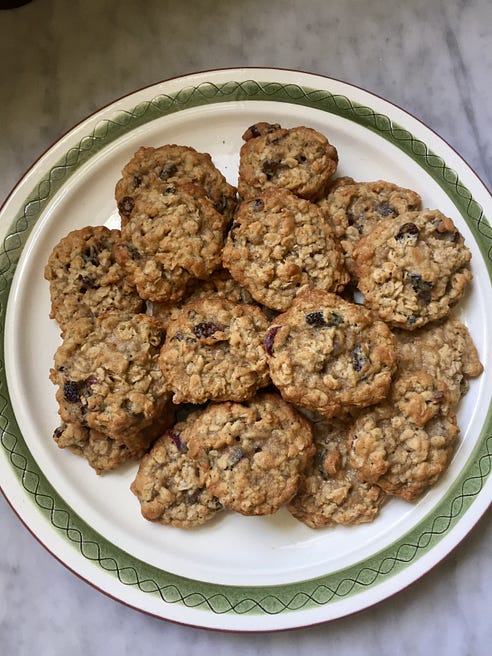
THE RECIPE: Barbara’s Oatmeal Raisin CookiesMy sister kept telling me how good Barbara Anderson’s oatmeal cookies were, and after I begged for the recipe and she sent it, I baked these cookies twice in one week. And then again and again. This no-nonsense oatmeal cookie began a part of my cookie rotation and our family’s fall cookie menu, and if I’m feeling decadent I sneak in some chocolate chips instead of the raisins! But mostly you just need to plump the raisins (or Craisins!)—so they’re soft and not hard—and place the dough in the fridge overnight—so the cookies hold their shape while baking. That’s it! Makes about 6 dozen cookies
You’re on the free list for Anne Byrn: Between the Layers. If you’re liking what you’re reading, why don’t you become a paying subscriber for more recipes, stories, and content.
|









0 comments:
Post a Comment