


Thank you for reading Between the Layers! If you’d like to support my work please consider becoming a paid subscriber.
The world watches the sad devastation on Maui after Hurricane Dora fueled wildfire flames and torched the coastal town of Lahaina on August 8. At this writing more than 100 people are reported dead, 850 are missing, and more than 2,000 buildings are destroyed. It was Hawaii’s largest natural disaster. Today I send love to Hawaii with this tribute. Read to the end for ways to help. ALTHOUGH I WASN’T RAISED ON MACARONI SALAD, I remember my first bite from a Tupperware container at a fall potluck in Atlanta. A neighbor—I believe she was originally from the Midwest—apologetically brought this simple mix of macaroni, crisp vegetables, and mayonnaise. It was her grandma’s recipe that had always fed a large crowd of family and farm workers. Served straight from the fridge, it was bright and quenching, not fancy at all, but extremely likeable. I hadn’t given macaroni salad a thought in 40 years until recently. Watching and reading the news about the lives lost in this massive fire and the tragic consequences of losing so many, it was all just too much to process. The least I could do was write about one of its most iconic recipes—macaroni salad.
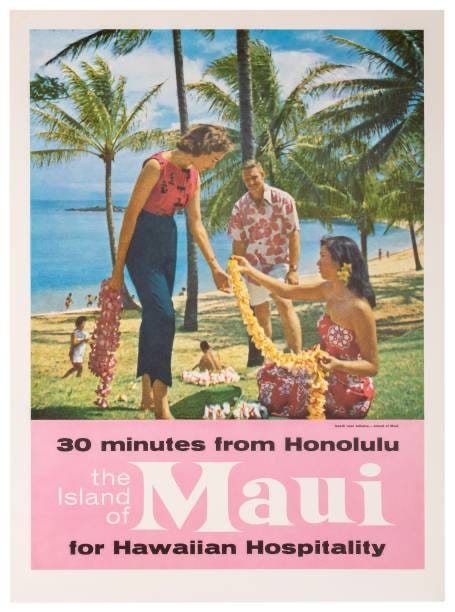
Hawaii became a U.S. state in 1959, and in the decade that followed, we saw American food and fashion reflect this paradise.Pineapple seemed to appear everywhere, in regional recipes like pineapple casserole and Hummingbird Cake, but also on pizza, and in tropical rum drinks. Are you old enough to have worn a Hawaiian print shirt? Remember Hawaiian potato chips? They began with a cottage industry called the Maui Potato Chips Factory, started by the Kobayashi family, who according to the late food writer Raymond Sokolov in Why We Eat What We Eat, started the movement of crunchy potato chips. Kobayashi’s grandparents were interned on the mainland with other American Japanese during World War II. They would learn a method of kettle cooking potato chips and recreate it on Maui in the 1960s. The secret to these often dark and crisp chips were the Russet potatoes, which have more sugar and darken with cooking.
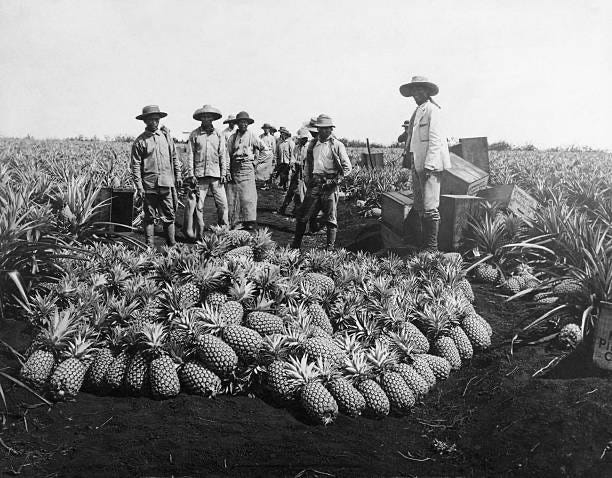
While Hawaii has lent a tropical vibe to so many recipes we still make today, its own foods have become a grab bag of flavors because they came to the islands with other people. They were Korean immigrants in the pineapple fields. And before that, Portuguese sugarcane laborers, who not only helped grow the sugar industry but crafted the ukulele to play their fado-style music. And don’t forget about Christian missionaries, or American Midwestern salesmen marketing Spam, or Alaskan salmon fishermen, and way back, Nantucket whalers who would stop in Lahaina. Located 2,000 miles from the mainland, these Hawaiian islands and their people have not only been influenced by others, but they’ve fought to retain their language and culture, and now in the rubble in Lahaina they will battle developers for this priceless land. They’ve also been reliant on what could grow locally. And like other remote places, kitchens have been stocked with shelf-stable ingredients that survive a mild storm and loss of electricity. Mayonnaise, evaporated and sweetened condensed milk, and Spam are staples. Small Spam rabbit hole: As a nice aside, Spam and its parent company, Hormel Foods, are donating $1 million of Spam—264,000 cans—to aid the victims of the Maui wildfire disaster. Spam’s founder’s son, Jay Hormel, created Spam in 1937 to use up surplus pork shoulder, mixing it with ham, salt, sugar, and sodium nitrite, and it was originally called ‘’spiced ham.’’ In 1943, two years after the bombing of Pearl Harbor, and after Spam was served to World War II GIs, it was eagerly adopted in Hawaii where being able to afford canned goods was a mark of status.
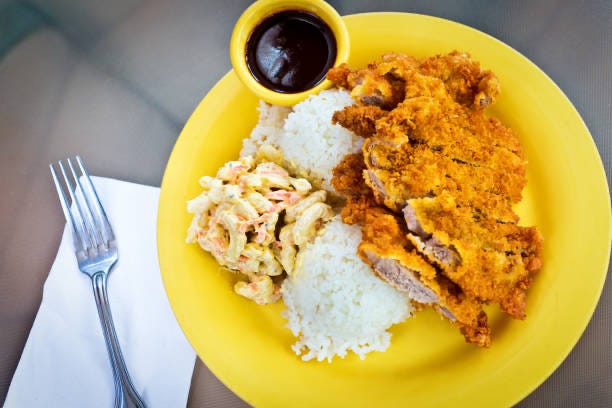
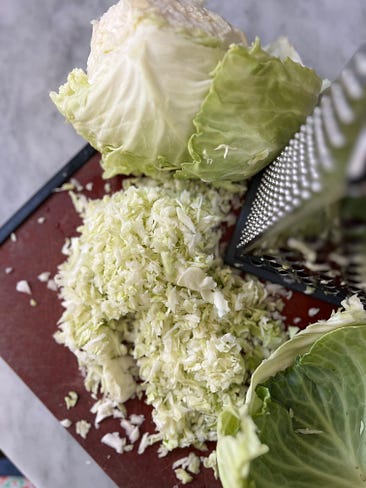
Something called ‘’plate lunch’’Joan Namkoong was born and raised in Hawaii and the daughter of Korean immigrants. She lives on the Big Island, and as former food editor for the Honolulu Advertiser, I contacted her in May about the true story of pineapple upside-down cake. I checked back in with Joan to find out her status after the Maui fires—she was safe on the Big Island—and also to ask her of all the intriguing recipes that come from Hawaii, what is the most iconic? The local favorite? Macaroni salad, she answered without hesitation. It is part of what’s known as a Hawaiian ‘’plate lunch.’’ Two scoops rice, mac salad, and a protein. ”These are the key components of a Hawaii-style plate lunch. Mac salad is that creamy counterpoint to the savory teriyaki chicken, kal bi ribs, hamburger steak, meat loaf, pork adobo or whatever the protein is. ‘’The dish evolved from the early 20th century introduction of macaroni (pasta) to the islands. A good one has a distinctive flavor, grated onion being a key ingredient alongside shredded carrot, cabbage, canned tuna or crab and grated hard cooked eggs,’’ Joan said. ‘’The most important ingredient is Best Foods mayonnaise.’’ Which is Hellman’s east of the Mississippi River, and she adds, ‘’lots and lots of it.’’ The story goes that when the first Chinese, Japanese, Portuguese and later Korean and Filipino immigrants prepared for their day in the fields, they packed a rice and meat lunch in ‘’kau kau’’ tins to take with them.
It’s fascinating how diving into the simplest recipe takes you down so many rabbit holesOne of my favorite sources to discover where a recipe comes from is a subscription service called newspapers.com. My search for macaroni salad told me the most mentions of it in American newspapers were in California and Pennsylvania. (Obviously these states have more newspapers than Hawaii!) It seems this salad predated commercial mayonnaise, which was born in the 1920s. Could the elbow pasta have been a substitute for potatoes in a salad dressed with a German-style sweet and sour dressing, so popular in Pennsylvania? Old salad dressings of cream and eggs were often called boiled dressings and have been used to cloak potatoes, vegetables, even chicken. One of my favorite chicken salads tossed with boiled dressing is a Mississippi recipe that I will share on Thursday. Homemade mayonnaise and dressings were well known in Hawaii. And even when commercial mayonnaise did make it to the Hawaiian islands, it was expensive. So to economize, people continued to make their own salad dressings. Wesson oil company sent out glass jars with markings on the sides to show how much oil and vinegar to add.
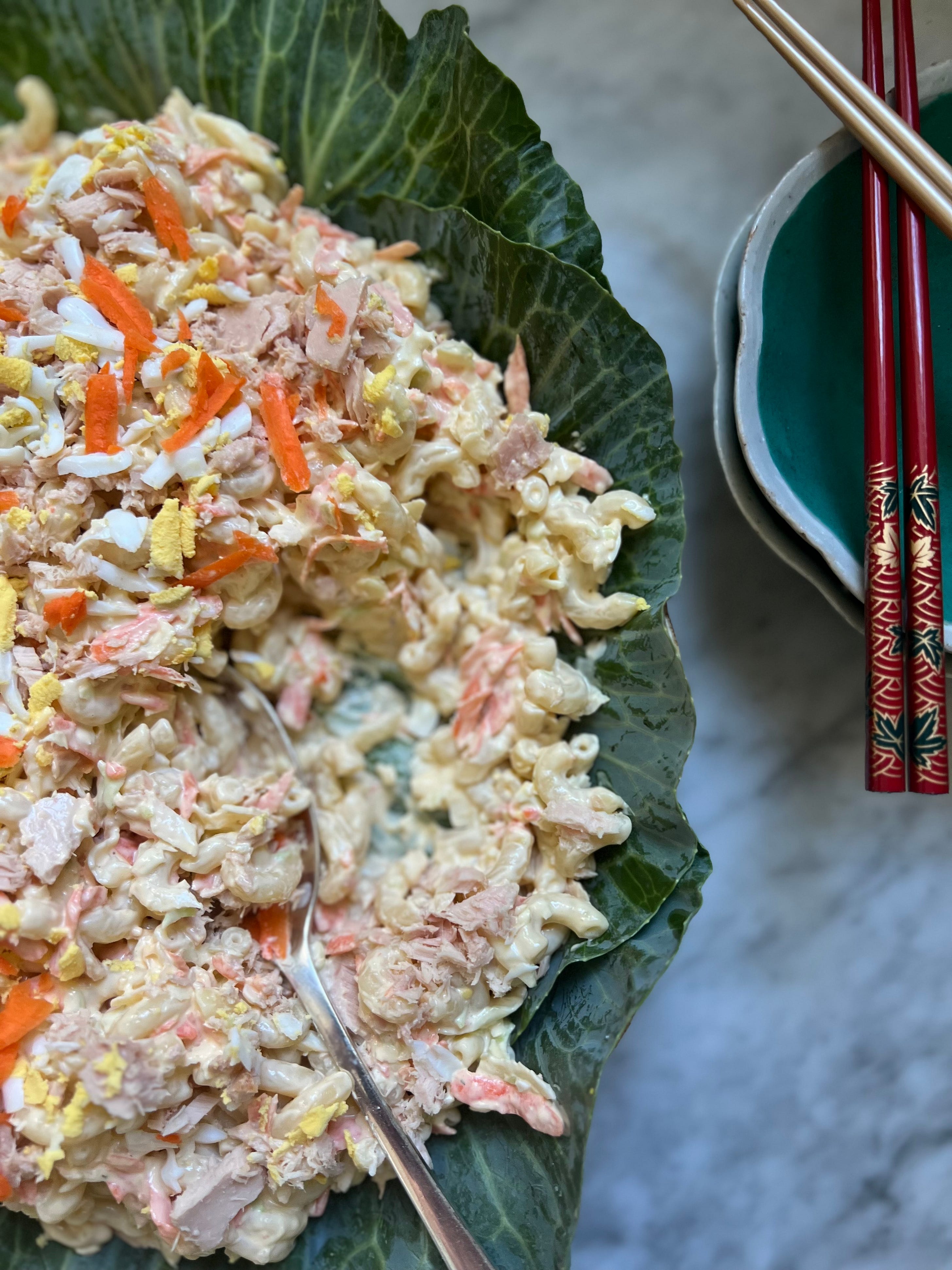
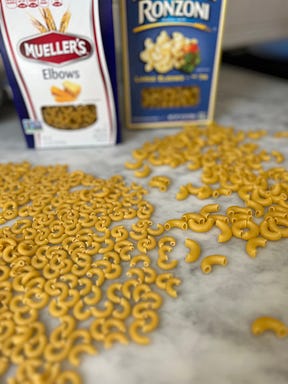
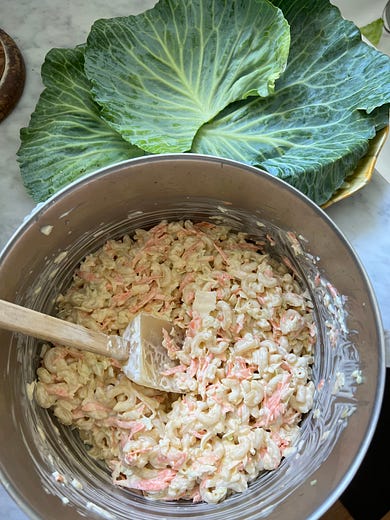
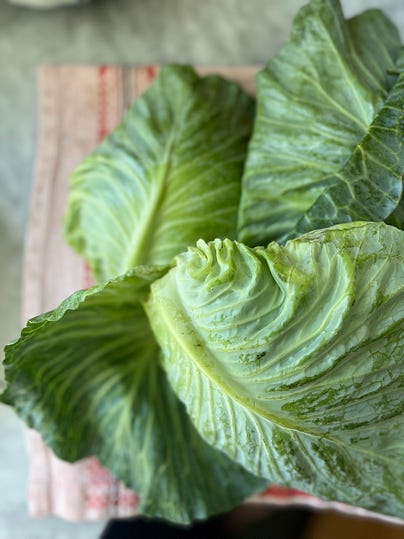
Just like with any recipe, macaroni salad comes with variationsI decided to make my own rendition of this salad following Joan’s recipe with a few tweaks. Hers is full of grated carrots, cabbage, and onion, which I love. It contains tuna, a plus, and grated hard-cooked eggs, another plus. But I had read how some cooks will jazz up the mayo with some rice wine vinegar and smooth it out with a little milk, and add a little sugar to sweeten it. That is the difference maker! Also, I couldn’t discard those cabbage leaves - aren’t they beautiful?
To make this macaroni salad my own, I spooned it into a bowl, sprinkled it with ground black pepper, and grated another hard-cooked egg over the top. And then I reached to the back of the fridge for my homemade sweet garlicky pickles and added a few slices. Part tuna salad, part egg salad, this was DELICIOUS! as well as a big nod to Hawaii. I’m embarrassed to say it took tragic wildfires for me to turn my attention to Hawaii, a place I visited just once in the early 1980s. I was only on the Big Island but overcome with the beauty of the place, the vicissitudes of the climate, from the drive through rainy Hilo to the glowing hot lava fields, all reminders that nature is at work every moment on these islands and the people who choose to live here are a resilient lot. Macaroni salad isn’t fancy, but it’s just the kind of comforting recipe that withstands time. Plus, it is really good at feeding people. Do you know Hawaiian macaroni salad? Do you have friends or family in Maui and want to share news or ways to help?Mahalo. - xo, Anne
Ways to support Hawaii relief:Hawaii Community Foundation and Maui United Way. Hawaii Chapter of Les Dames d’Escoffier. Women in the culinary field are feeding nearly 1000 people a day, mostly first responders and families in housing with no access to food/shopping. FEMA will only let food in to the shelters that is canned and prepackaged and while we all appreciate their good work, the Dames are ordering produce from local farmers and cooking meals to be frozen for those in need. World Central Kitchen, which has been on the ground and doing its amazing work. Maui Food Bank has a wishlist of monetary, staple, and toiletry donations. This Thursday for my paid subscribersI share St. Paul’s Chicken Salad, that delicious old-fashioned recipe with a boiled dressing. It’s far from Hawaii, but it’s a cold salad much appreciated in the heat of August.
THE RECIPE: Hawaiian Macaroni SaladLet me say first that I used a lot less mayo than many recipes call for. I will add that if you plan on making this salad ahead, chilling it, and then serving, you will need an extra 1/2 cup of the mayonnaise because it firms up as it chills. I like the tang the rice wine vinegar brings. The milk is there to smooth out the mayonnaise. And the sugar helps the salad work alongside salty and spicy foods. Add sweet potatoes to the salad, possibly fresh pineapple, omit the tuna altogether, shave in some fresh corn—this salad can easily be yours. And you could also use kimchi, which is a Korean style of sauerkraut, or a mix of fresh cabbage and kimchi. Makes 6 to 8 servings
You’re on the free list for Anne Byrn: Between the Layers. If you’re liking what you’re reading, why don’t you become a paying subscriber for more recipes, stories, and content.
|









0 comments:
Post a Comment