


I appreciate your reading Between the Layers! For the entire post and recipe, won’t you consider becoming a paid subscriber? Three Things for Spring ☘️☘️☘️ - No. 198Theodora FitzGibbon + Irish Yeasted Fruit Loaf + the Secret of Starch Water
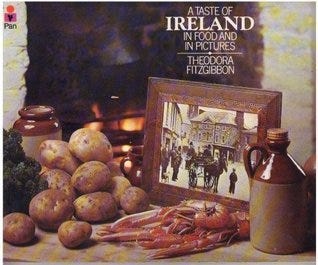
WHEN MY MOTHER WALKED INTO a Dublin bookstore decades ago and bought a book called A Taste of Ireland in Food and Pictures (1968) by Theodora FitzGibbon, who knew such a simple cookbook would bring so many pleasurable recipes to our family table? Flipping back through this splattered and stained book today, it splays flat at Yeasted Fruit Loaf, with a big red check in the top corner of page 24. Underneath the recipe title is a small description, what cookbook writers and editors call the ‘’hednote.’’ Hers is brief but to the point:
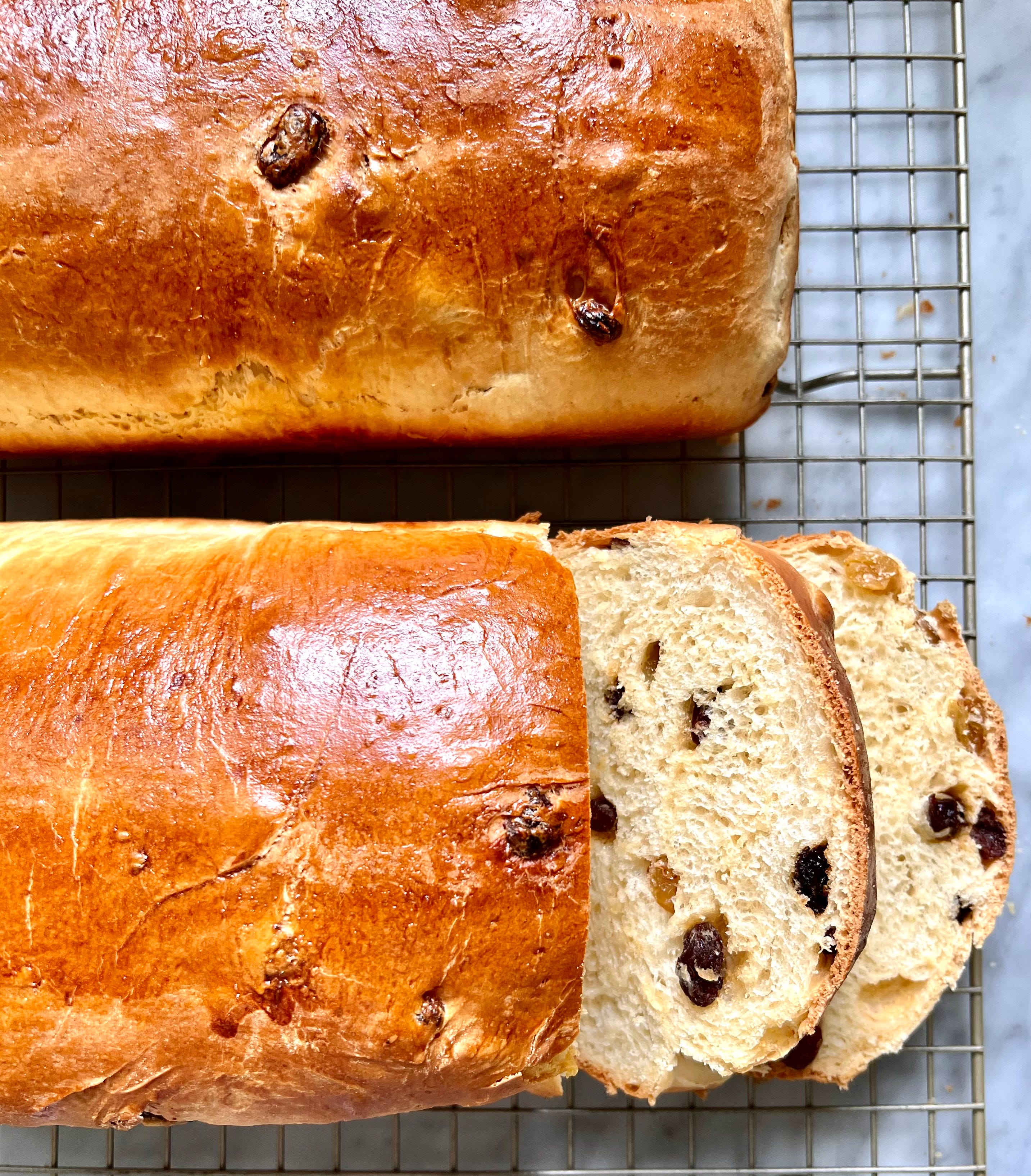
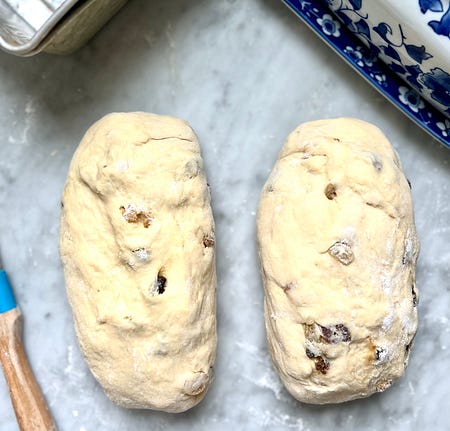
Sadly, my mother never made Theodora’s Trout Baked in Wine with the half bottle of white wine, stick of butter, lemon and parsley poured over it on page 53, or the crispy Potato Cakes on page 27, which you wash down with whiskey and water. But that Yeasted Fruit Loaf would begin our March baking madness. Studded with raisins, fragrant from the yeast, and rich from mashed potatoes, it was bliss. And it contained an odd cup of potato cooking water, too. Starch water, so in vogue right now for watering your plants or just helping your pasta sauce coat each strand, has been the ultimate waste-not in Italy and definitely in Ireland where this poor country couldn’t afford to pour out a thing.
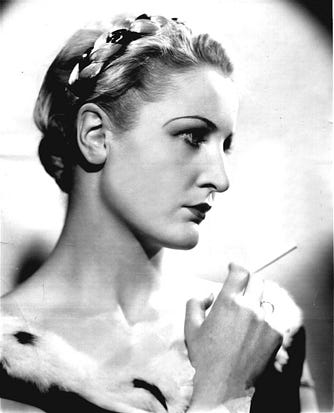
Who was Theodora FitzGibbon?She was born Joan Eileen Rosling in London in October 1916, the daughter of John Archibald Rosling and Alice Winfred Hodgins. Her Irish father was in the Royal Navy, and a distant parent who was home little, but she traveled with him to India, Europe, and the Middle East. Educated in Belgian convents, she learned to cook at a finishing school in Paris but found more pleasure acting in repertory theater and modeling couture clothes. She was tall, blonde, and willowy and changed her name to Theodora. In her memoir, A Taste of Love, comprised of two books written in her twenties, she shares stories of a comfortably shabby life—her lovers, her meals—and name-drops famous acquaintances as easily as a child spills crumbs from a sugar cookie. In her lifetime she was friends with poet Dylan Thomas and frequented the same parties as artists Dali and Picasso. And while it’s easy to get swept up in the celebrity and try as you might, you won’t be able to keep track of the drinks she’s had in a day, the real gems in this book are her first-hand accounts of cobbling meals together in Paris before World War II and learning a new normal during the London Blitz.
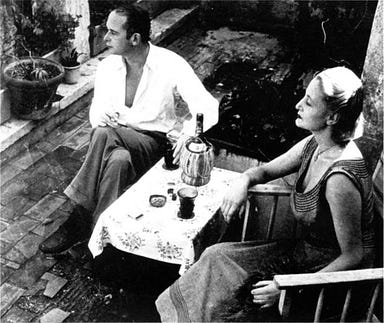
After a messy divorce, Theodora moved to Ireland, and would write 25 cookbooks, the most masterful of which was The Food of the Western World (1976), an encyclopedic feat covering 34 countries and taking 15 years to pull together.She would become the first president of the Irish Food Writers’ Guild. According to the Belfast Telegraph, people devotedly read and cooked her recipes because they wanted to live her life. In my mother’s tattered copy of A Taste of Ireland, Theodora is a careful guardian of Irish cuisine, respectful of simple people and places where this food, her food, was constructed, giving historical context and simple, straightforward recipes. The book is filled with 19th Century black and white photos belonging to her second husband, the Irish filmmaker George Morrison. And she writes in the introduction:
Theodora FitzGibbon died in March 1991 in Killiney, Ireland. She was 74. I don’t think my mother could have made a better choice in a cookbook that day. And I am positive the tour bus was double-parked outside waiting on her to make a decision so they could roll on to the next town.
Why something as simple as potato water helps us bake better breadAndrew Janjigian writes Wordloaf here on Substack and is everything bread—doctor, guru, therapist, engineer all rolled up in one. For 11 years he was test cook, editor and ‘’resident breadhead’’ at Cook’s Illustrated magazine. Today, in addition to writing his fascinating and lively Substack, he writes and develops recipes for Serious Eats, King Arthur, and Epicurious. So I knew Andrew was who I needed to call regarding starch water in bread. My Yeasted Fruit Loaf always baked up rich and fragrant with sufficient moisture to help it last a few days on the kitchen counter if we hadn’t devoured it in one sitting. I suspected it was the starchy water from cooking the potatoes and the mashed potatoes themselves. And if it was, then could I use this tactic in other recipes? Andrew said yes. We’re talking not so much about starch water, he said, as the gel that forms to keep a network of starches on the inside of the bread. It’s the same principle as when you add cornstarch to thicken a sauce. The liquid goes from loose to silky and glossy. ‘’The water gets bound up and trapped,’’ Andrew said, ‘’like stealth water, it’s hidden because it is gelled. It makes the bread softer and moister and means it is slower to stale.’’
We also talked about another trick I’ve been using lately when making yeast rolls from a soft and sticky dough. ... Subscribe to Anne Byrn: Between the Layers to read the rest.Become a paying subscriber of Anne Byrn: Between the Layers to get access to this post and other subscriber-only content. A subscription gets you:
Read Anne Byrn: Between the Layers in the app Listen to posts, join subscriber chats, and never miss an update from Anne Byrn.
|









0 comments:
Post a Comment