


It’s March! Thank you for reading Between the Layers! If you like what you read, why not consider becoming a paid subscriber? Risi e Bisi: A Spring Green Risotto - No. 199With nearly 200 newsletters written, I’m serious about this thing…
WE ONCE TRAVELED WITH THE FAMILY to a triangular house set in the lush green Northamptonshire countryside of England. I have this photo in my head of our three children walking through this 16th Century doll house of a place with triangular rooms and the theme of three throughout. The builder was Sir Thomas Tresham, a devout Catholic who left no opportunity unturned to architecturally pay homage to the number three and the trinity. Writing this newsletter each week on Substack I often use the rule of three as I come up with a topic and then look at it three ways or approach it in three parts. And as I near writing 200 newsletters in this space, I have learned three things:
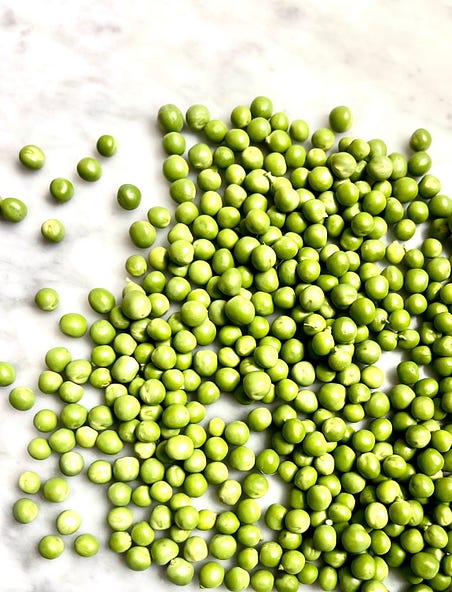
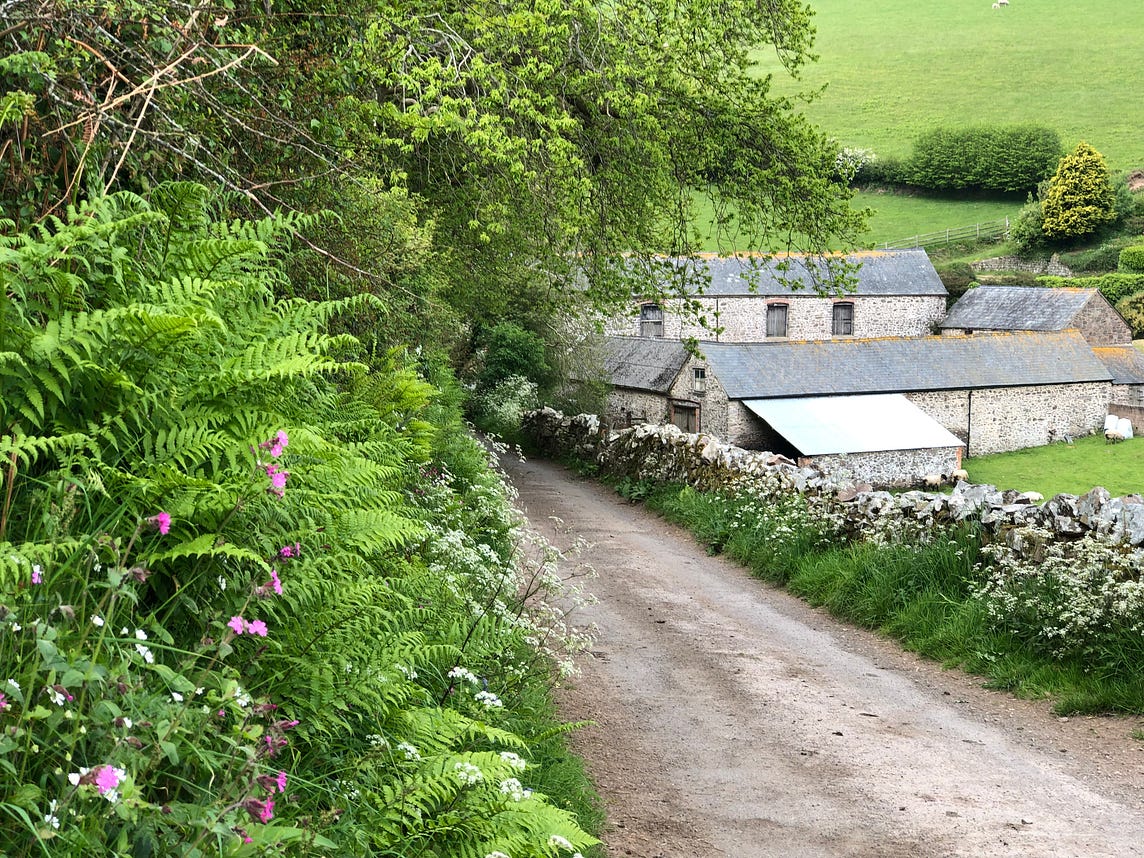
Part One: The color green.Right now it’s all around us. My husband has seeded rye grass and with the cool temps and the rain, we have a vivid green lawn that will go away once the heat arrives. We know it. The green fades to brown, so for now we just stare at the fields of green. It’s no surprise how green makes us feel. It’s the anti-anxiety color. I felt it flying over Ireland that first time and looking down from the plane’s window. Green patches like pieces of a quilt all stitched neatly by stone fencing begged you to stretch out in them. I feel soothed when I see green in a salad or a side, and especially in the springtime, see asparagus come into the markets. Green is fresh, it is alive, and it invigorates me. Don’t get me wrong, I love artificially colored Andes candies, too, and creme de menthe poured over vanilla ice cream, as well as cool mint ice cream layered into a chocolate cake. But I also love naturally green foods—edamame, wasabi, pistachios, matcha, and Key limes. And I love bright green peas.
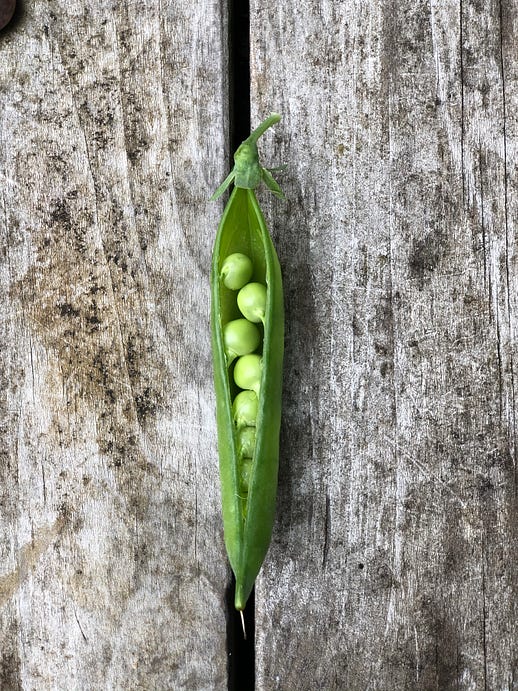
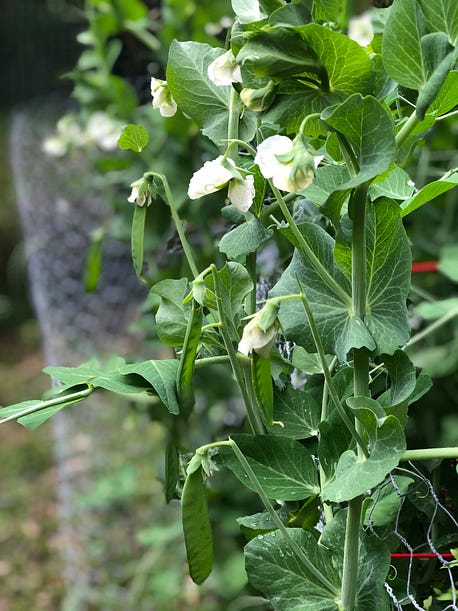
One year, I grew the most beautiful green peas.And little did I know until I pulled down the vines that a large gray rat snake admired them, too. He scurried out when my garden boot got a little too close, and my shriek must have helped him slither a bit faster. Snakes inhabit gardens if you live in a wooded place like we do, hunting all kinds of critters eager to eat the peas and the spinach. Those are the sweet flavors they’ll risk their lives for. Basil and cilantro, not so much. Once it’s warm enough for basil to thrive, I’ll blend it up with a handful of parsley, garlic, olive oil, and Parmesan. Pesto is absolutely the most delicious form of chlorophyll I know, and even if you don’t grow your own basil, you can make your own pesto from store-bought basil and add dabs to pasta, soup, white beans, and a grilled cheese sandwich. Green elevates our mood.
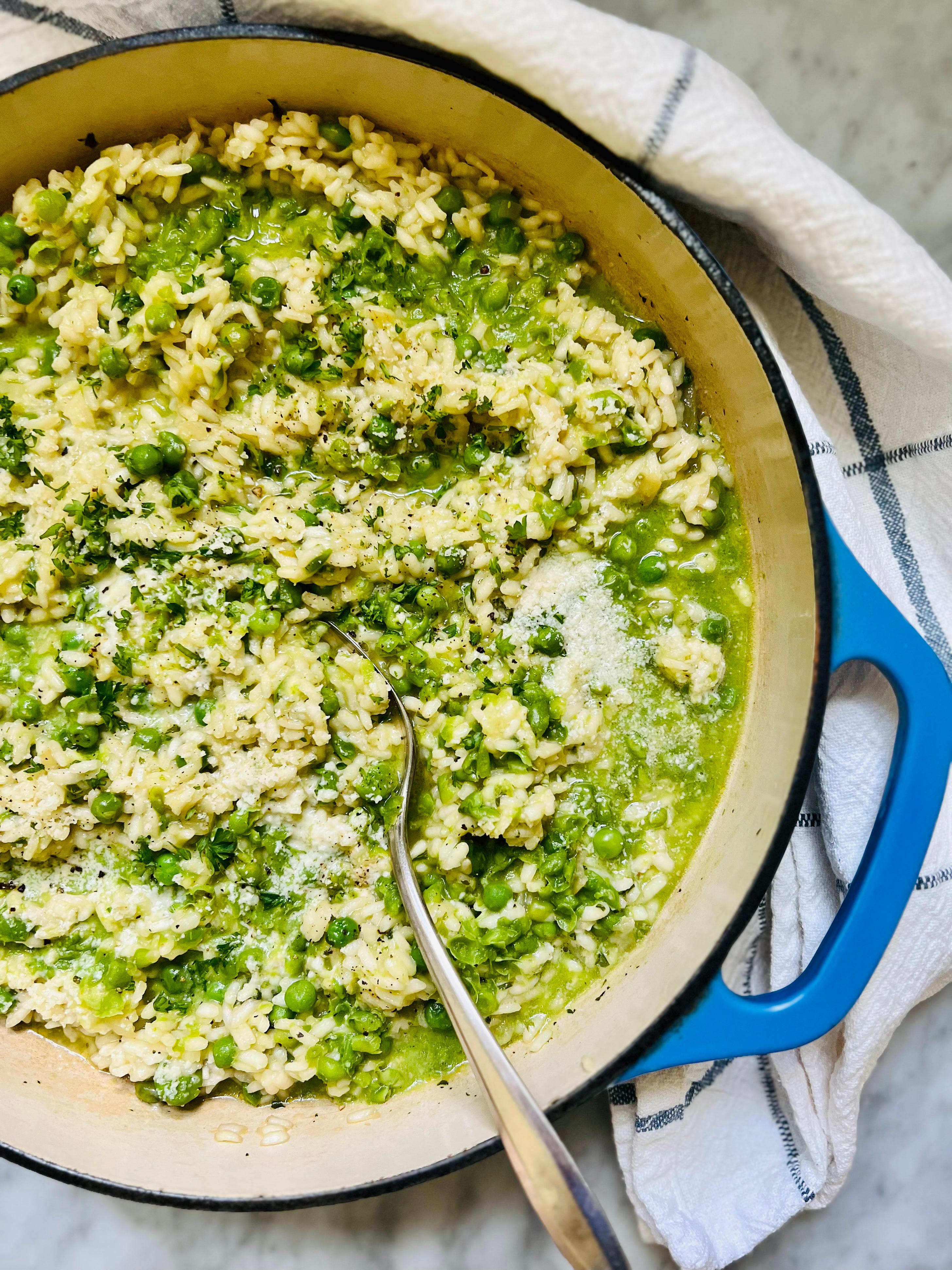
Part Two: Fresh green peas + rice = risi e bisi.Peas were a vegetable my children ate without complaining. I had been raised on the grim gray canned peas, but my children would get bright green frozen. Lucky souls! I sautéed a little onion in butter and then added the peas, water to cover, pinch of salt, simmered until soft, and added a bit more butter at the end. Anyone would love these peas, right? Frozen peas are something we always stock. If there are no salad greens, we have peas. And if you have wisdom teeth pulled or a mild sprain, a bag of frozen peas works wonders. So as I was flipping through the book, Pasta Grannies, which I will dive into more on Thursday, I find risi e bisi, or Italian rice and beans, most often made with fresh green peas in the springtime. It is native to Venice but can be made anywhere. Without any peas in the garden this year, I remembered the bags of Trader Joe’s fresh peas and knew what I was cooking for supper. Spring in a bowl. On a plate. From a spoon.
Part Three: Thank you!We’ve been together for nearly two years, but I’d be remiss not to welcome the newcomers. Between the Layers is a kind but feisty place when needed to read about cooking and baking from my perspective but also yours. You will meet some nice people and good cooks here. And I appreciate your support as well as your civil behavior. I can count on one hand, actually one finger, how many people have misbehaved in the comments. And I’ve been pretty outspoken about life, about laws, about war, injustice, and food. I’ve pushed some boundaries that have made my husband a bit nervous for me to write about, but me, not so much. If I can’t be honest about what I think at my age, when can I be? I know from the surveys you are interested in cooking and baking, mostly baking. I know you live in places all around the world and that you’re really here for the recipes. Some of you want to read the history, and a smaller number care about my opinion. Many of you have my cookbooks and some of you didn’t know I wrote cookbooks. So, this newsletter is a very good thing because each week I am starting with a clean slate. We don’t have to pick up where we left off. We finished that, and if we didn’t, well, we can continue to talk about it in the comments. These are new waters of ad-free journalism. And this is not social media! Can I say that again? This isn’t where you feel FOMO, fear of missing out, or at least I hope you don’t. This is where you might feel enlightened or inspired? I post as beautiful a photo as possible taken with my iPhone and sometimes by a professional photographer. As I balance this Substack newsletter with life, a book project, and a completely adorable granddaughter, I appreciate your joining me on the journey and commenting or just emailing and giving me some sort of feedback because I don’t want to do this alone! And, my paid people, thank you for believing in me. For my founding subscribers, you not only believe in me, but you want everyone at the table and allow someone who cannot afford to go paid to join us. Coming Thursday for Paid Subscribers, I dive into grandmothers, the story of Pasta Grannies, and bake a delectable asparagus lasagna. Have a great (green) week! - xo, Anne
THE RECIPE: Risi e BisiThis recipe is adapted from the cookbook, Pasta Grannies by Vicky Bennison. It is a recipe from the grandmother Giuliana from the Veneto region. She makes a stock from the pods of her homegrown peas. So it is a seasonal recipe, one to savor in the spring. I adapted it slightly to use fresh peas from the grocery, but you could use frozen, too, although they will require less cooking time. Make sure to use good Parmesan, either Parmigiana Reggiano or Grana Padana. In a pinch, try Whole Foods’ 365 grated Parmesan, which is quite good. ‘’You are aiming for a sloppy risotto,’’ the book advises, so keep adding stock and the pea cooking water until it’s sloppy. ‘’If it thickens up too much, stir in a little more stock.’’ Want more veg? Tuck in handfuls of spinach leaves as it simmers down and top with steamed asparagus tips. Want to make this meal more substantial for meat eaters? Shower it with prosciutto! Makes 4 to 6 servings Prep: 20 to 25 minutes Cook: 25 to 30 minutes
You’re on the free list for Anne Byrn: Between the Layers. If you’re liking what you’re reading, why don’t you become a paying subscriber for more recipes, stories, and content.
Read Anne Byrn: Between the Layers in the app Listen to posts, join subscriber chats, and never miss an update from Anne Byrn.
|









0 comments:
Post a Comment