


Thank you for reading Between the Layers! If you’d like to support my work please consider becoming a paid subscriber. Baking Up Joy in Cheesecake - No. 241A Jewish family’s treasured recipe is a big success in my kitchen
CHEESECAKE IS one delicious science experiment. The ingredients are simple enough—cream cheese, eggs, and sugar—but it’s how you combine them—at room temperature, of course—and what type of crust they are poured into and how the cheesecake is baked—water bath or not?—plus the care you take to not over-bake and gently cool it down that all contribute to the irresistible and velvety texture. The first time I tasted legit cheesecake, and I am not talking Sara Lee frozen or Jell-O no-bake, was at Wolfie’s in Miami. I was about 10 and my father was speaking at a Kiwanis convention and brought our whole family along for vacation. (Honestly, all these years later I haven’t forgotten the tsunami of flavors and textures that meal offered…the sour pickles, crusty rolls, corned beef piled high, and that fat, dense wedge of cheesecake.) My mother didn’t bake cheesecake, nor did her mother, so tasting a ‘’cake’’ without layers and frosting was profound. I would bake a lot of cheesecake over the years, especially New York-style with the higher heat at the beginning and then a lower heat to gently cook it through as well as cheesecake trends like Basque cheesecake with a shiny mahogany-colored top. But I hadn’t baked Eleanor’s Cheesecake, which I found in the Kugels & Collards cookbook by Rachel Barnett and Lyssa Harvey and reviewed last Tuesday. It was simpler, more delicate, and a lot easier, plus it tasted like someone far wiser about cheesecake than myself had baked it. And that’s because Eleanor Alpert had baked this cheesecake on many days of her life.
Jews have always baked cheesecakeCheesecakes are far older than anything coming out of an American oven, dating back to early Greek and Roman times. As you might expect, baking a cheesecake requires dairy, and the dairy-farming Quakers of Pennsylvania were the first to bake cheesecake in America from fresh cheese curds. The Moravians, too, baked cheesecakes at the Sun Inn in Bethlehem, Pennsylvania, in the mid 1700s. The fertile soil of the Philadelphia area made it a dairy center and a cheesecake hub, says local historian William Woys Weaver. So even if Chester, New York dairy farmer William Lawrence invented the cream cheese we know in 1875, his cheese would be named ‘’Philadelphia’’ as a marketing nod to the region with the exceptional dairy. Lawrence enriched a French Neufchâtel cheese formula with cream to arrive at a luscious spread. The name ‘’cream cheese’’ stuck. As waves of immigrants arrived in America, they brought a love of cheesecake from Eastern Europe and Germany with them. By 1900, half of America's Jewish population lived in New York and had a penchant for cheesecake baked with cream cheese. "Jews have always baked cheesecake," says Joan Nathan, author and Jewish foodways author. Nathan says cream cheese manufacturers recognized that to Jews, spreading a "schmear" of cream cheese on a bagel was sacred. Baking it into cheesecake? A most profitable religious experience! In the early 1900s, Jewish brothers and Lithuanian immigrants Isaac and Joseph Bregstein began making cream cheese in Brooklyn, and their Breakstone’s brand was born. For her famous cheesecake, Eleanor Jane Calvert Alpert of Sumter, South Carolina, used three packages of cream cheese.
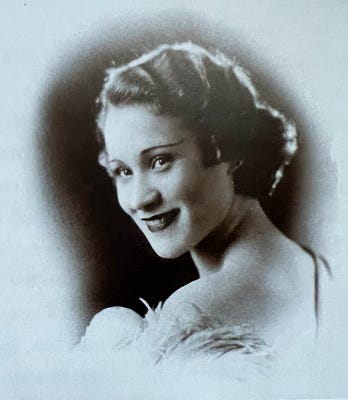
Baking Eleanor’s cheesecakeThe daughter of a Jewish mother and a Protestant father, Eleanor was born in Augusta, Georgia, grew up in Columbia, South Carolina, and met the love of her life, Maxie Alpert, at temple. They made their home an hour east in Sumter, where they ran a ladies’ fine apparel shop called Alpert’s, founded by Maxie’s mother who had immigrated from Russia in the early 1900s. And while Eleanor’s cooking resembled that of most Southern families, minus the pork fatback, she developed a love of baking cheesecake in her later years, says her daughter Cindy Alpert Saad of Columbia. ‘’She was organized and liked to measure out her ingredients the night before and did most of her baking in the early morning when the kitchen was cool,’’ Cindy says. ‘’Her sought-after cheesecake was handed down from her mother, but through the years, it became known as Eleanor’s cheesecake and she became quite the cheesecake queen, sharing them with many.’’ It wasn’t until after her mother, 85, died in 2001 that Cindy taught herself to bake cheesecake using her mom’s recipe and mixing bowl. ‘’Every time I bake, I feel her presence and it brings such joy.’’
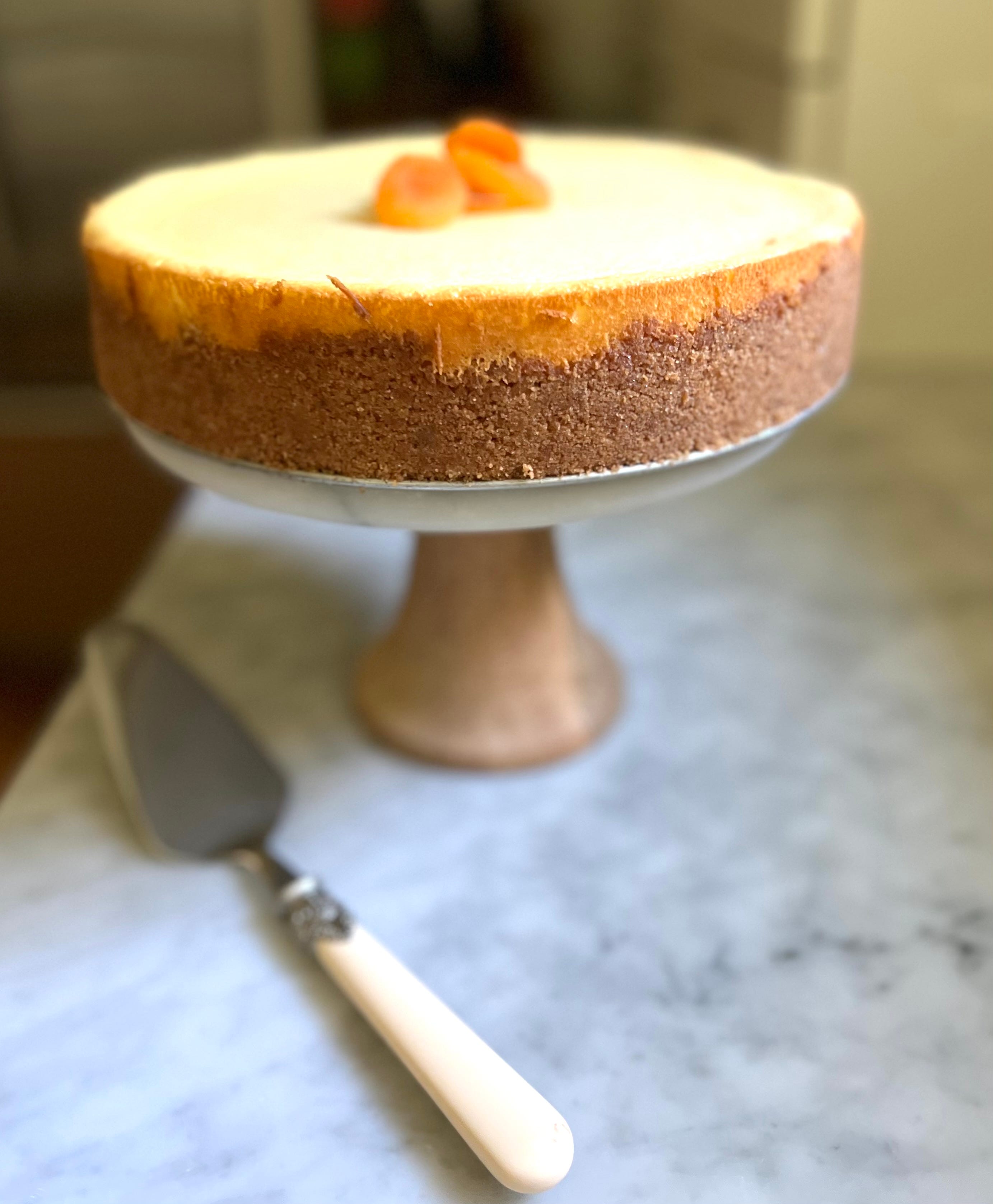
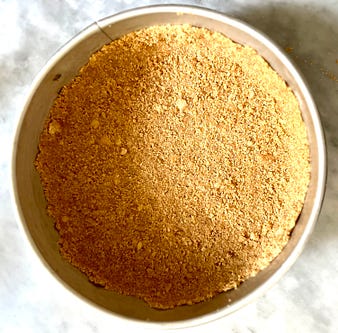
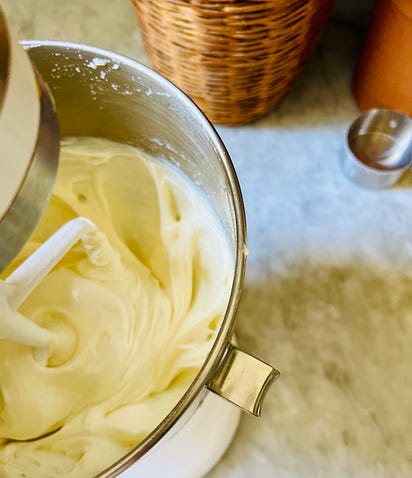
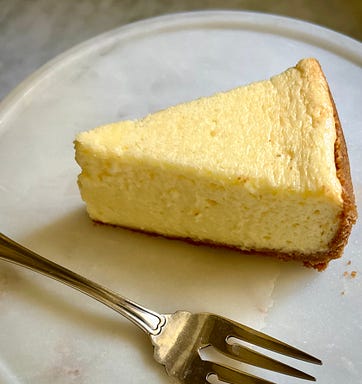
What I loved about Eleanor’s cheesecake recipe is its simplicity, not just in ingredients but also in method.There is no pre-baking of the crust. You just press the graham cracker mixture into the pan, and pop the pan in the fridge to chill while you make the filling. Eleanor placed the pan in the fridge for one hour, but I only placed it there about 20 minutes, the time needed to make the filling. Unlike more complicated recipes, her cheesecake bakes at one temperature the whole time—325ºF. And unlike other methods, there is no water bath, but you don’t have to worry about over-baking it and the cheesecake cracking. If you follow the directions to bake one hour, then turn off the oven and leave the door ajar, letting it rest one hour in the turned-off oven, the cheesecake has a smooth and unblemished top. Eleanor’s recipe is fussy only in that you need to separate the eggs and softly beat the whites. To save time, I beat the whites first in the mixing bowl, then transferred them to another bowl so I could reuse (without washing) the mixing bowl for the filling.
Perfection is found in the little detailsBack to that first comment about the science experiment. Cheesecakes involve science and technique. But I feel so confident in Eleanor’s method that you can absolutely riff on her recipe with a grating of lemon zest in the filling or by using cinnamon graham crackers in the crust. Do plan ahead and remove the eggs and cream cheese from the fridge so they are room temperature before beginning to create a filling that is smooth and even. It’s all about temperature. Warm the half-and-half gently in the microwave or on top of the stove so it doesn’t go into the bowl cold. And make sure you just softly whip the egg whites so when you fold them into the smooth filling, the whites disappear. With cheesecake, and science, little things make a big difference. What do you love about cheesecake?Many thanks to Kugels & Collards authors Rachel Barnett and Lyssa Harvey for sharing this recipe. Have a good first week of September! - xo, Anne This Thursday, for paid subscribers, cheesecake is still on my brain, and I bake a beautiful Basque style of cheesecake for fall.
THE RECIPE: Eleanor’s CheesecakeI used 1 1/2 cups of graham cracker crumbs in the crust recipe, which came about halfway up the sides of my 9-inch springform pan, and I loved the look. If you want the crust to go higher, increase the crumbs to 2 cups and the butter or margarine to one stick. Also, I reduced the sugar in Eleanor’s recipe to 2 tablespoons (from 3) and it was plenty sweet. I ever so slightly upped the butter (or margarine) to 6 tablespoons from 5 1/3 (two thirds of a stick) in Eleanor’s recipe, which to me is trouble to measure. Jazz up the crust if you like with a pinch of cinnamon or by using cinnamon-flavored graham crackers. Swipe lemon or orange over the Microplane grater into the mixing bowl, or add a dash of almond extract, for an easy upgrade to the filling. This recipe is adapted from the book, Kugels & Collards, by Rachel Barnett and Lyssa Harvey. Makes 8 to 12 servings
You’re on the free list for Anne Byrn: Between the Layers. If you’re liking what you’re reading, why don’t you become a paying subscriber for more recipes, stories, and content.
|








0 comments:
Post a Comment