


Thank you for reading Between the Layers! Africana: Cooking up Vibrancy - No. 229Meet Lerato Umah-Shaylor and make her spicy summer mango chicken
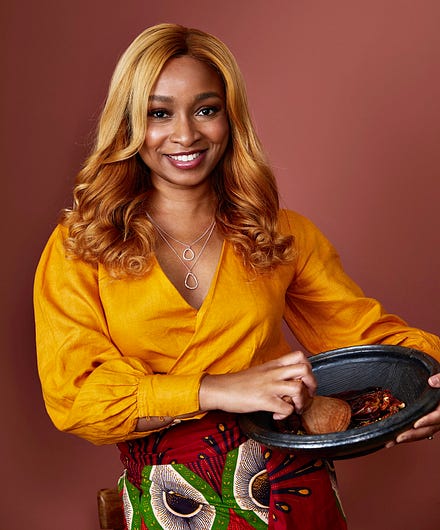
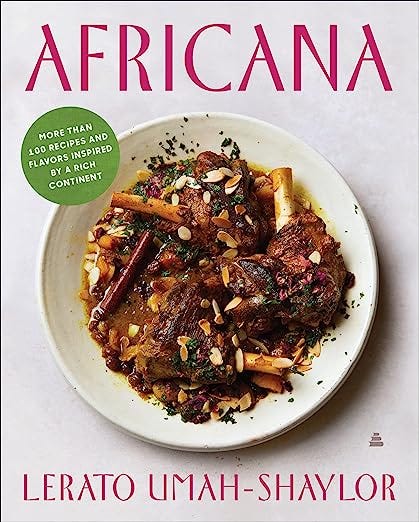
When I took part in Substack’s Food Writers’ Intensive program last year, one of my fellow writers was Nigerian-born Lerato Umah-Shaylor, who lives and teaches cooking in England and writes the Cook with Lerato newsletter on Substack. Her first book, Africana, was released in the United Kingdom last year and in America in March. It offers recipes from her native Nigeria to Morocco, Madagascar, Ethiopia, South Africa, and more. I share Lerato’s story and her lovely recipe today. NO DOUBT, THE HEAT OF SUMMER BRINGS an unmistakable vibrancy to cooking. But reading Lerato Umah-Shaylor’s new book, Africana, and stopping to stare at the dazzling food photos that jump from its pages, I want her recipes infused with bright peppers, soft plantains, sweet mangoes, slow-cooked chicken and okra, and rich coconut all year long. Lerato, which means ‘’love’’ in the language of Sotho-Tswana, was born and raised in coastal Lagos, Africa’s most populous city of 20 million and located on the continent’s western Gulf of Guinea. Her mother, Stella Uche, operated a restaurant when Lerato was born. ‘’She worked while carrying me strapped onto her back,’’ Lerato says. ‘’So you could say I started this life in food very early.’’ Her mother also showed her how to navigate the organized chaos of a Lagos food market. ‘’My mother is a great haggler,’’ she writes in Africana. ‘’She is stern with some of the market traders and friendly with others…One must be assertive and insistent. You must appear to know how much the peppers should be, and be prepared to haggle.’’ Lerato traveled with her mother to the Republic of Benin, located just west of Nigeria, an area once referred to as the ‘’Slave Coast.’’ It is known for Akara, the black-eyed pea fritters that would travel with the enslaved to the Caribbean and Brazil. Lerato adds ginger and spring onions to her Akara recipe to add warmth and bite. After frying, she drains them on paper towels and serves them with ‘’Sauce Piment,’’ a spicy tomato and chili sauce made by pureeing Scotch bonnet peppers, tomatoes, red onions, garlic, ginger, black pepper and a little vinegar in a food processor and then she stores it drizzled with olive oil in the fridge until time to serve. But on holidays in the United Kingdom, Lerato developed a love for ‘’a good cup of tea with cream and jam on buttery scones.’’ She entered university in the UK when she was a teenager and studied economics and development. And when describing her studies with members of our Substack food intensive, she said she once had a dream of closing the gap between the developed and the developing world. Yet she became disillusioned. She went on to write about socioeconomic issues in national newspapers in Nigeria and started a food business and a cooking show on morning television. She returned to the UK, cooked for supper clubs, and in London and Sussex began teaching others how to cook the recipes of Africa.
An African perspectiveLerato writes about the foods of the diverse continent of Africa, she says, ‘’as a child of Africa.’’ Her perspective comes from ‘’someone who has been brought up and lived amongst Africans of varying nationalities.’’ She is one ‘’who has risen to the different seasons, plucking mangoes, and sinking my teeth into their meaty flesh, waiting for sweet corn roasted by the fire, and yams.’’ (And the white Puna yams she refers to are not the orange sweet potatoes of America, by the way.) Like many of us, she learned to cook instinctively without any measurements from her mother and grandmother, Theresa Ebonne, but also in community with other cooks, ‘’learning so much from the mamas in the markets.’’ As I read her recipes and listened to her stories, I could sense the African influence on my own Southern cooking, from the hot peppers and black-eyed peas, to frying fritters and making cookies with tiny benne seeds, brought with the enslaved people forced to work on plantations of sugar cane or rice in southern America and the Caribbean. Food is often the connector. ‘’We have heartwarming stories that bind us together and reflect our diversity and our similarities,’’ Lerato says. ‘’I want the world to see how much richness we have in food. But at the same time, I want them to see how similar we are in terms of culture and memories and practices. We are more connected than we think.‘’
Two last questionsQ. Do you feel the world is looking to African cooking now? A. ‘’Definitely. The Black Lives Matter movement has made people more interested in learning about Africa. From food to fashion to music. It’s the story of the spice trade. And it is the story of slaves and how they carried their foods and traditions with them. That is driving the interest. This movement of people and culture. ‘’Because of its coastlines, and also because of colonialism and slavery, Africa has been a trading hub for humans and commodities and foods. For example, clove and vanilla are big flavors in East Africa. Fruits and vegetables and spices from India and Southeast Asia had to move past Africa to the Caribbean. Plantains came from Southeast Asia, we started growing them, and later they became the crop of Jamaica and the Caribbean.’’ Q. What do you hope to achieve with your newsletter and your book, Africana? A. ‘’Definitely to spread the gospel of African cooking. I don’t want to be ‘’preachy’’ about my mission, just simply live it, cook it, and share it in the most enticing way to inspire as many as possible to read, cook, enjoy and share my African recipes. I feel African cooking needs a strong voice, but I do love food, all food, especially vibrant flavours from across the world.’’
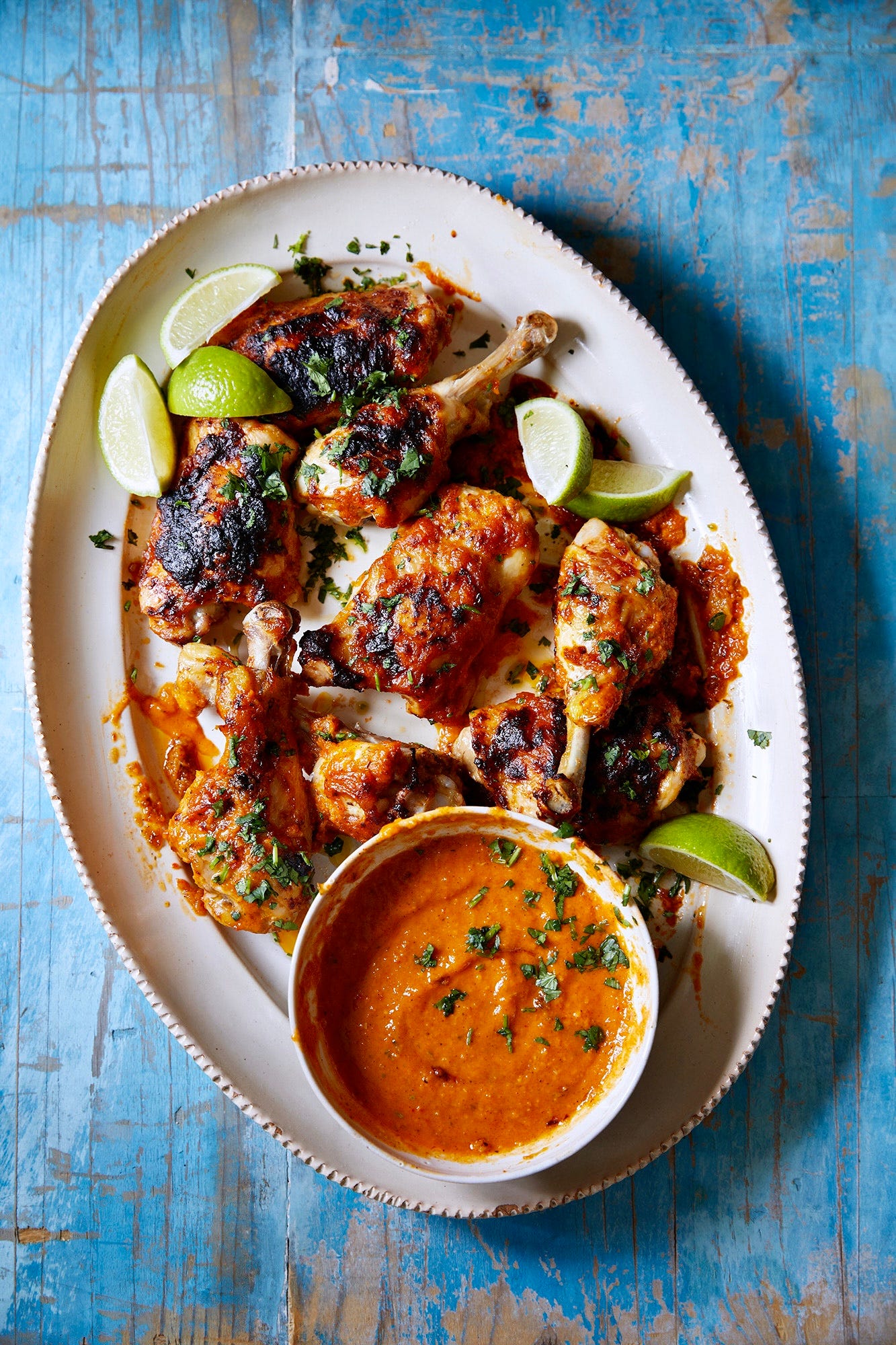
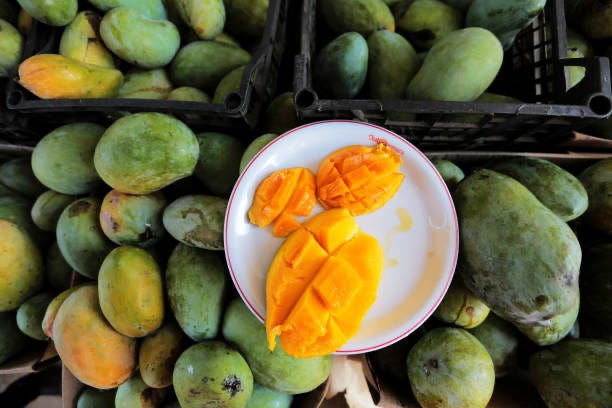
The recipe and MANGO SEASON!I was torn between which recipe to cook, from Suya to Piri Piri chicken. The former is a Nigerian street food close to Lerato’s heart. It is thin strips of beef tossed with chilies, ginger, and peanuts, thread onto skewers, and grilled over a hot fire. And the latter, Piri Piri chicken, comes from Mozambique and Africa’s southeastern coastline along the Indian Ocean. Because I had hot peppers in my garden, and Lerato said I could add any hot chilies I have on hand, I settled on the mango recipe. I had read her newsletter about the time she and her mother were driving through the villages of the Gwari tribes in Niger State, and a group of women were sitting under a bush of mango trees, selling their fruit. ‘’This was the most delightful sight,’’ she writes, ‘’…these mangoes had the world’s shortest mileage on them, probably falling straight from the trees into their baskets.’’ How could I not be inspired by this story and this amazing young woman who wants the world to love and understand African cooking as much as she does? Thank you, Lerato, for sharing Africa with us! To buy Lerato’s book, click HERE. To subscribe to her Cook with Lerato Substack newsletter, click HERE. To view her website and learn more about her cooking classes, both in-person and online, click HERE. And to make her fabulous chicken with chilies and mangoes, the recipe follows! Coming Thursday for paid subscribers, an old-fashioned letter exchange with Kate McDermott of Pie Cottage in Washington State. She shares her recipe for cherry pie and I share my recipe for peach crisp baked in an iron skillet. THE RECIPE: Lerato’s Mango & Lime Piri Piri ChickenIn this recipe from the cookbook, Africana, by Lerato Umah-Shaylor (Amistad, $37.50), she uses sweeter Scotch bonnet peppers instead of the traditional and more assertive African bird’s eye, called ‘’pili pili’’ in eastern Africa. She says you can mix peppers for varying heat and flavor. And the sweeter the mangoes, the sweeter your marinade so pick you mangoes wisely! Makes 4 to 6 servings Allow an overnight marinating
You’re on the free list for Anne Byrn: Between the Layers. If you’re liking what you’re reading, why don’t you become a paying subscriber for more recipes, stories, and content.
|







0 comments:
Post a Comment