


Thank you for reading Between the Layers! Slow Down: The Secret Art of Cooking Fish - No. 214Slow-roast grouper in the oven to retain moisture and saute snapper and other delicate fish in an iron skillet
LIVING IN THE LANDLOCKED SOUTH, I don’t have easy access to fresh fish. And I’ve sadly never lived on a coast where I can just wander down to the dock to see what has come in that day. If it hadn’t been for my years spent in Atlanta when I could buy all sorts of fresh fish either at Harry’s Farmer’s Market or Your DeKalb Farmer’s Market, or get the fish I needed from a friend who worked for Inland Seafood, a fabulous wholesaler supplying the city’s best restaurants, I doubt I’d be as comfortable as I am today cooking fish. But just like with baking, once you learn a few tricks, the process becomes second nature and you get better at it. My favorite cooking methods today for fish involve either an iron skillet or a slow-roasting method shared by my daughter.
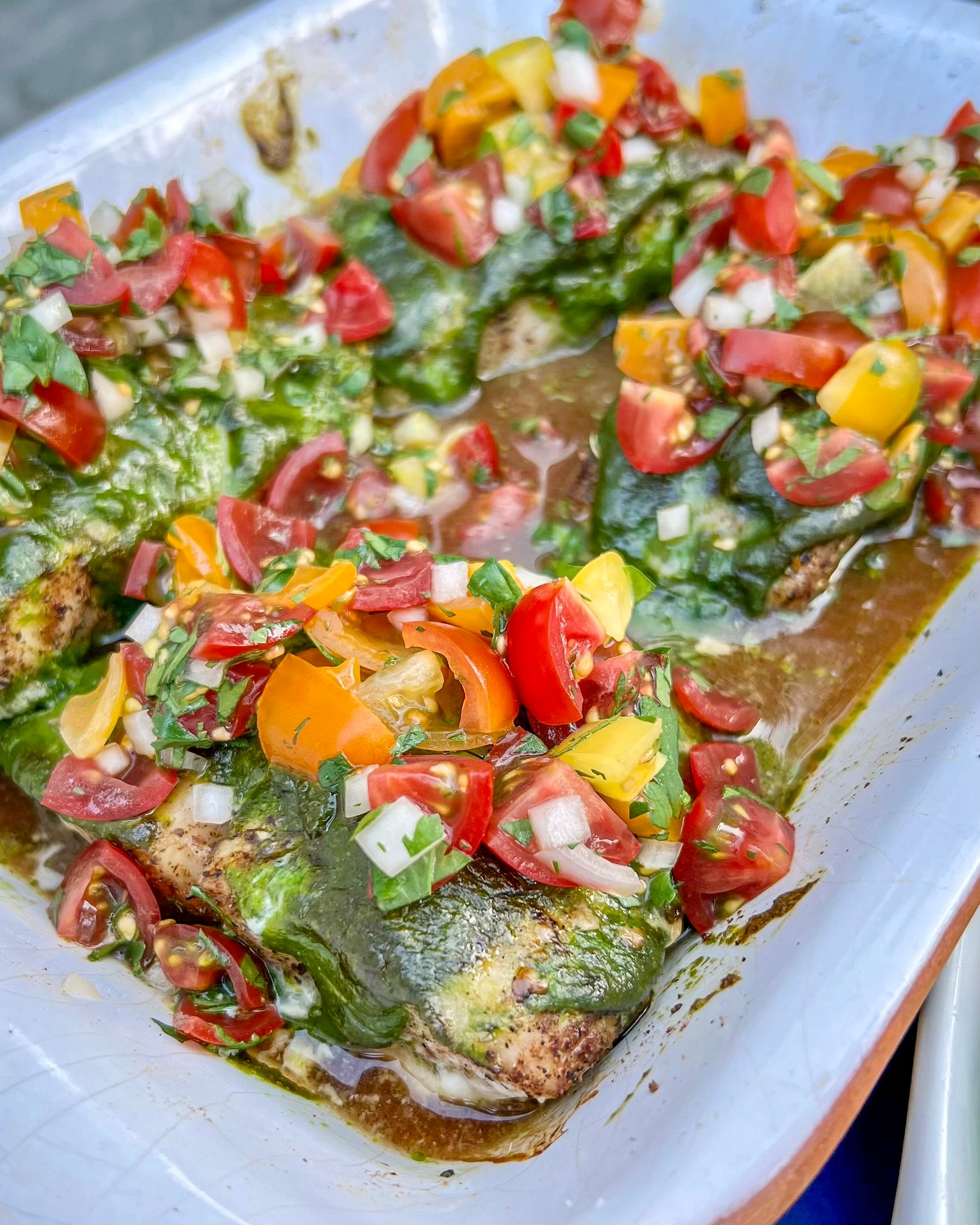
First strategy: Bake it slowlyMy daughter Kathleen has figured out how to cook great fish. She lives in Florida, so she can get really nice fish for weeknight dinners or special occasions. Her personal favorites are thick and meaty fish like grouper she cooks slowly in the oven. Which is counter to the way she usually cooks in a hurry-up style to get dinner on the table. And it’s a better method for grouper than broiling or grilling, which can dry out and toughen the fish if not done right. She spotted a recipe for slow-roasted fish tacos in Bon Appetit, gave it a try, and then added her own spin. It’s a recipe that as a private chef she can adapt to the fish, the favorite flavors of her clients, and the occasion. ‘’I remembered that this was like how I had baked fish in parchment in my apartment in Atlanta. I got away from cooking fish that way,’’ she said. ‘’I’m always trying to cook so quickly.’’ When we visited Kathleen a couple months ago, she baked us this grouper for dinner. So delicious! After placing the fish in a Pyrex pan (or on a baking sheet), she drizzled it with avocado oil (or olive oil) and seasoned it with Terrain seasoning, a feisty combination of salt, black lime, sun-dried tomatoes, and oregano and a collaboration between Brightland olive oil and Burlap and Barrel spices. Then, she ladled a pureed sauce of jalapeno, cilantro and avocado oil over the top and baked it at 300ºF until the internal temperature was 125ºF, about 30 minutes. The temperature will rise while resting to 130º. ‘’You could just as easily use cod, sea bass, salmon, or halibut, she said. ‘’The thicker the fish the better. The slow-cooking allows the fish to just break down.’’ We gobbled up the fish and cooking juices with rice. You could definitely serve it with soft corn or flour tortillas and homemade pico de gallo, or segments of orange and Kalamata olives for a Mediterranean twist. Why does fish benefit from cooking slowly?This method that Kathleen stumbled upon aligns with the core principle of cooking fish. Food science guru Harold McGee, author of On Food and Cooking: The Science and Lore of the Kitchen, says because fish has fragile connective tissue and a low fat content, it should be cooked gently and ‘’only to the point that the muscle proteins coagulate.’’ He elaborated a bit on the fish’s anatomy: ‘’The combination of sparse, weak connective tissue and short muscle bundles results in the great tenderness of fish, and its troublesome tendency to fall apart altogether during cooking.’’ Amen!
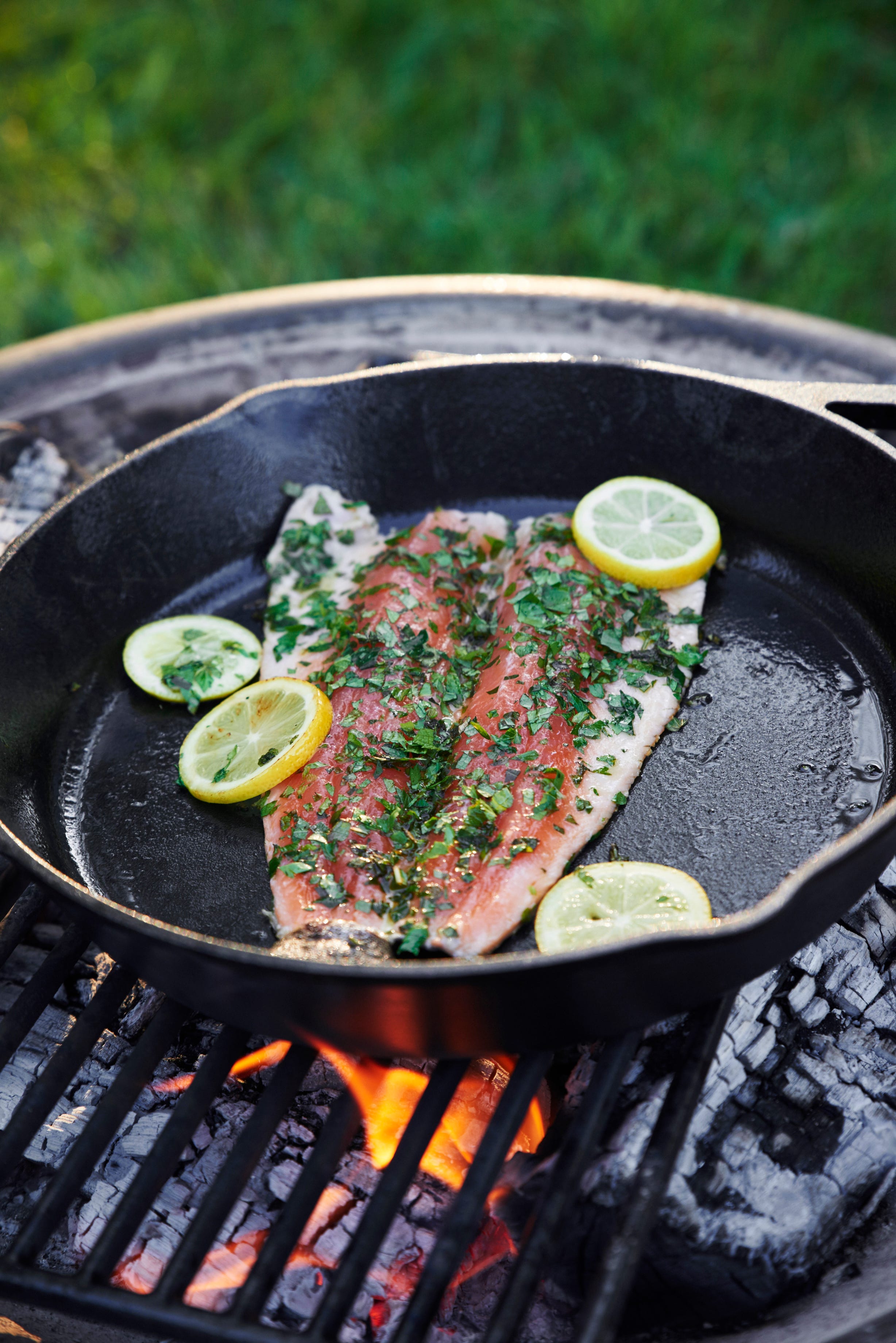
A second strategy: Protect delicate fish from the fire. Use an iron skillet.An iron skillet doesn’t mean you always heat the heck out of it. If anything, with cooking fish, the heavy skillet protects fish and cooks it more gently, I learned while writing my book, Skillet Love. Once it’s dredged in seasonings and the fish hits the hot skillet, reduce the heat a bit just so it sautes, then turn it carefully, and then bathe the fish with some of the pan juices while it’s cooking on the other side. If there aren’t pan juices, add a pat more of butter and squeeze of lemon, a few capers, and some chopped parsley and make some! And while I love a good grilled salmon any day, more often than not the fish falls through the grill grates, and I don’t get the beautiful look I’m going for. So, I’ve come to rely on the iron skillet plopped right on top of my gas grill. Plus, cooking fish outdoors keeps lingering aromas out of the house, and it keeps the kitchen cooler in summertime, too. What’s your favorite way to cook fish? Do you slow roast, grill or pan-fry?So this summer when you head someplace near the coast and have access to beautiful fish, remember to cook it slowly in the oven. And remember to pack your cast-iron skillet! Report back on what you’ve cooked! Have a great week! - xo, Anne Coming on Thursday for Subscribers: A short and sweet recipe for this Merry Month of May that is somehow flying by. Homemade Skillet Brownies in a caramel (yum) puddle.
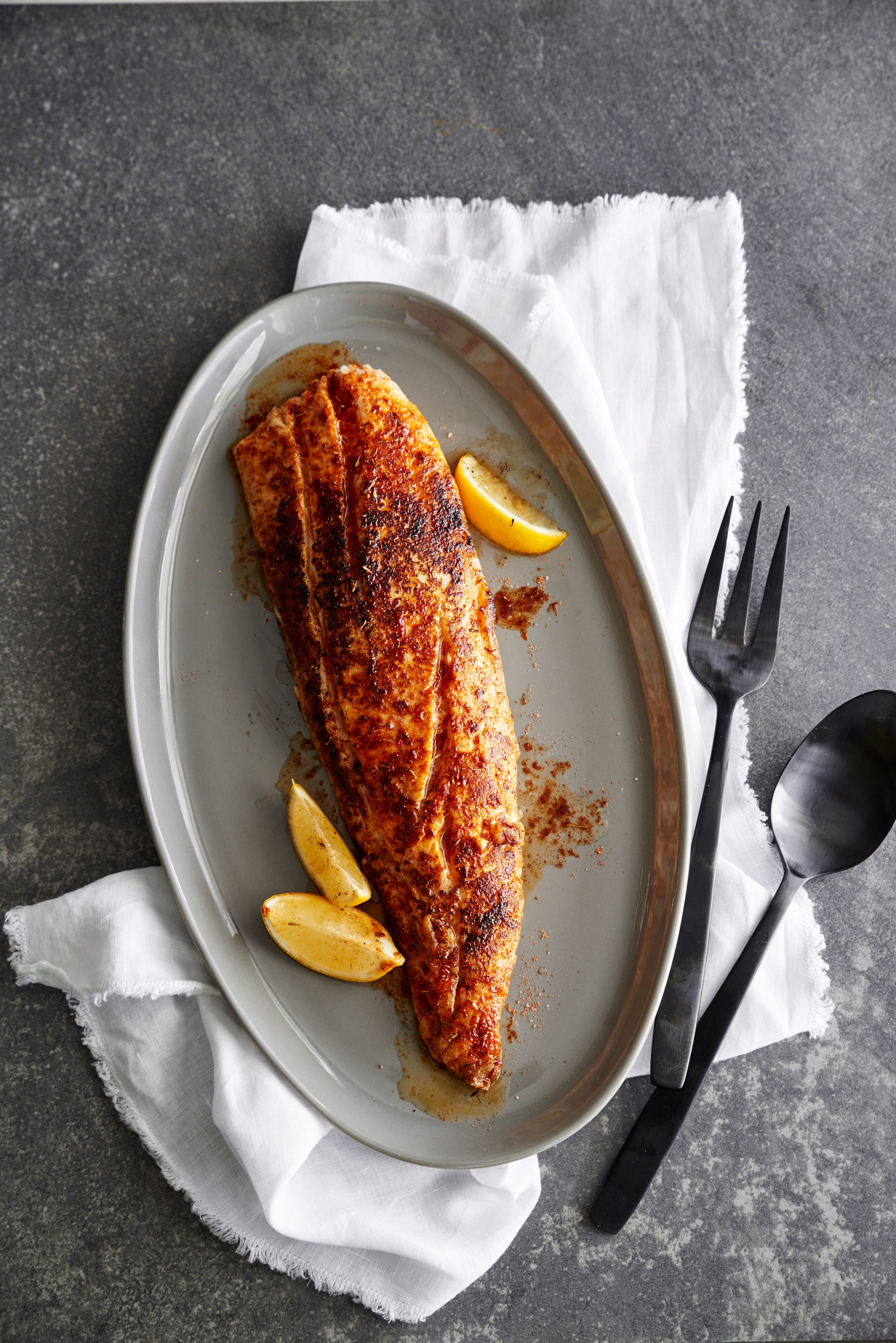
THE RECIPE: A Better Blackened SnapperRed snapper is a delicate white fish that shouldn’t be overcooked. Cajun chef Paul Prudhomme changed the way we ate when he blackened redfish in a cast-iron skillet in the late 1970s. My version is a bit tamer. The fish is still brushed with melted butter or avocado oil, and then dredged in a hot and spicy seasoning before searing in the skillet. Prudhomme’s recipe was such a national phenomenon that it nearly depleted the Gulf of Mexico’s redfish population. Even today, it is hard to find redfish outside of the New Orleans area. Makes 2 to 4 servings Prep: 20 to 25 minutes Cook: 4 to 5 minutes
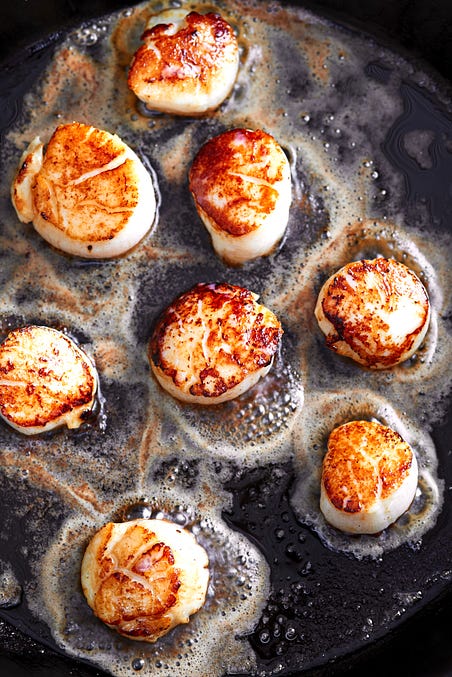
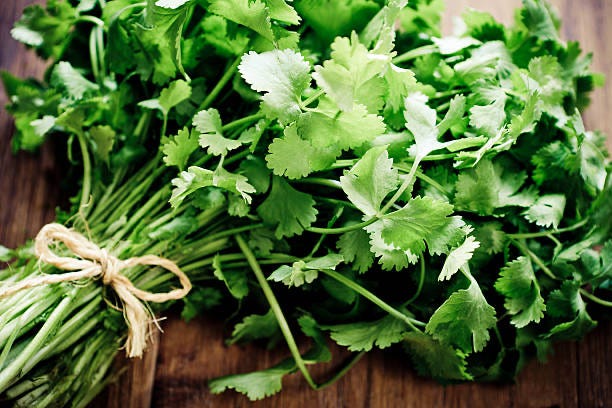
Here’s that herby sauce for Kathleen’s slow-cooked grouper: Blend 4 cloves garlic, 2 packed cups parsley or cilantro or a mix of the two, 1 jalapeno pepper, seeded, deveined and chopped, a pinch of ground cumin and pinch of kosher salt and 1/2 cup avocado oil until smooth using a blender or food processor. Pour over the fish before cooking. Because not every fish recipe needs to be slow…those skillet scallops cooked in minutes: Choose dry scallops that have not been soaked in a phosphate solution to preserve them. Remove the small tendon on the side of the scallop. Pat them dry very well with paper towels. Season with sea salt and freshly ground black pepper. Heat a cast-iron skillet on high until it smokes, about 4 minutes. Pour a teaspoon or two of vegetable oil in the skillet. Add the scallops, spacing them about two inches apart, and let them brown for 1 1/2 to 2 minutes, without moving. (They will release themselves once they brown.) Add 1 tablespoon unsalted butter to the pan. Turn the scallops to cook on the other side, about 1 to 1 1/2 minutes. (You can serve the scallops as is, or you can deglaze the pan with some soy sauce, grated ginger and lemon juice.
A lovely skillet grilled trout: Leave the skin on to protect the fish from overcooking. Cook butterflied with the head removed. Season the cut side of the butterflied fish with lemon juice, salt, and pepper. Place a large cast-iron skillet on a grate over a hot fire or the gas or charcoal (gray coals) grill until smoking hot, about 4 to 5 minutes. Slide the trout into the skillet skin-side down and let cook it without turning for 4 minutes. Run a metal spatula under the fish to loosen any bits of skin sticking to the pan, add a pat of butter to the skillet and carefully flip it onto the other side. Cook 2 minutes more, then remove the skillet from the fire and the fish from the skillet. Garnish with chopped fresh parsley and chives and halves of lemons for squeezing. A quick pan sauce for iron skillet fish on the grill: Remove the cooked fish from the skillet, and deglaze the pan over the fire with 1/4 cup lemon juice or white wine. Scrape the sides and bottom of the skillet with a metal spatula to loosen any browned bits. Whisk in 1 to 2 tablespoons of cold butter. Season with salt and pepper, and add chopped fresh herbs, such as parsley, tarragon, or dill. Or add a tablespoon of capers. Pour the juices over the fish, then serve. You’re on the free list for Anne Byrn: Between the Layers. If you’re liking what you’re reading, why don’t you become a paying subscriber for more recipes, stories, and content.
|








0 comments:
Post a Comment