


I hope you enjoy this issue of Between the Layers! Share it with your friends.
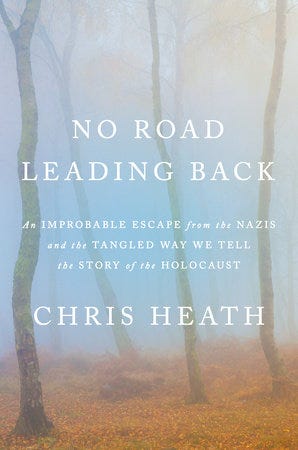
THIS PAST SUMMER I SHOWED UP EARLY for an event at the American Library Association meeting in Philadelphia and got to meet author Chris Heath. We were both at the conference to accept an award and take part in an authors’ panel. Heath writes for GQ, The Atlantic, Esquire, and Vanity Fair, and his recent book, No Road Leading Back, came out of a magazine story he penned. It details the atrocities that took place in 1941 when more than 70,000 Jews were shot dead in a Lithuanian forest. Anxious to hide incriminating evidence of the murders, the S.S. (short for Schutzstaffel—Nazi Party leader Adolf Hitler’s personal bodyguards) enslaved a dozen Jews to exhume the fallen bodies and incinerate them. The prisoners dug a tunnel with bare hands and spoons while they were being guarded day and night, Heath said. His book details their improbable escape. You could have heard a pin drop in that vast conference room as Heath told the crowd why he was drawn to a book about the Holocaust. This Lithuanian story had rarely been told in its entirety, he said. While today most of us only want to know what’s essential, we need to speak about uncomfortable historical events with honesty and accuracy so we don’t forget them.
When it was my turn to speak, I talked about how recipes are artifacts and help us gain a deeper understanding of ourselves and other people. How recipes hold stories and secrets. They tell us about love and about scarcity. They are our past, and every family with a box of hand-written recipes has the keys to unlocking that past. I went on to tell the audience of librarians that what I want to write about today is how life and food intersect. I write about people who’ve never been seen or heard of. I write about subjects that might feel uncomfortable, like gun violence and how America is off track, and what that has to do with cooking. I write about immigrants and how they relate to the food story. I write about grief, loss, and joy, and the recipes we make out of those feelings. I write about America. If you watched Ken Burns’ excellent documentary on the American Revolution you and I learned that not all Americans wanted the Revolution. It was a hard sell. But what America stood for—democracy—hadn’t been done before. It was an original project. And when you are original and there’s not a pattern to follow, you have to work harder and you might get off track. (McCarthyism and January 6, 2021 come to mind.) America was founded on religious freedoms, and people respected those differences. Early English Quakers were staunch abolitionists. Jews in South Carolina were some of the state’s founding fathers. And yes, there have been pockets of religious prejudice across the country, but why on earth does anything related to religion need to be on our government websites today? Why can’t we find things that unite us instead of divide us? Food is one of those things. I believe the founding fathers and mothers would have been proud how Americans didn’t stay silent in spite of the chaos coming out of Washington. Two percent of Americans peacefully protested in October, and interestingly, it takes only 3.5 percent of a population to affect real change. That’s something to think about and work toward...
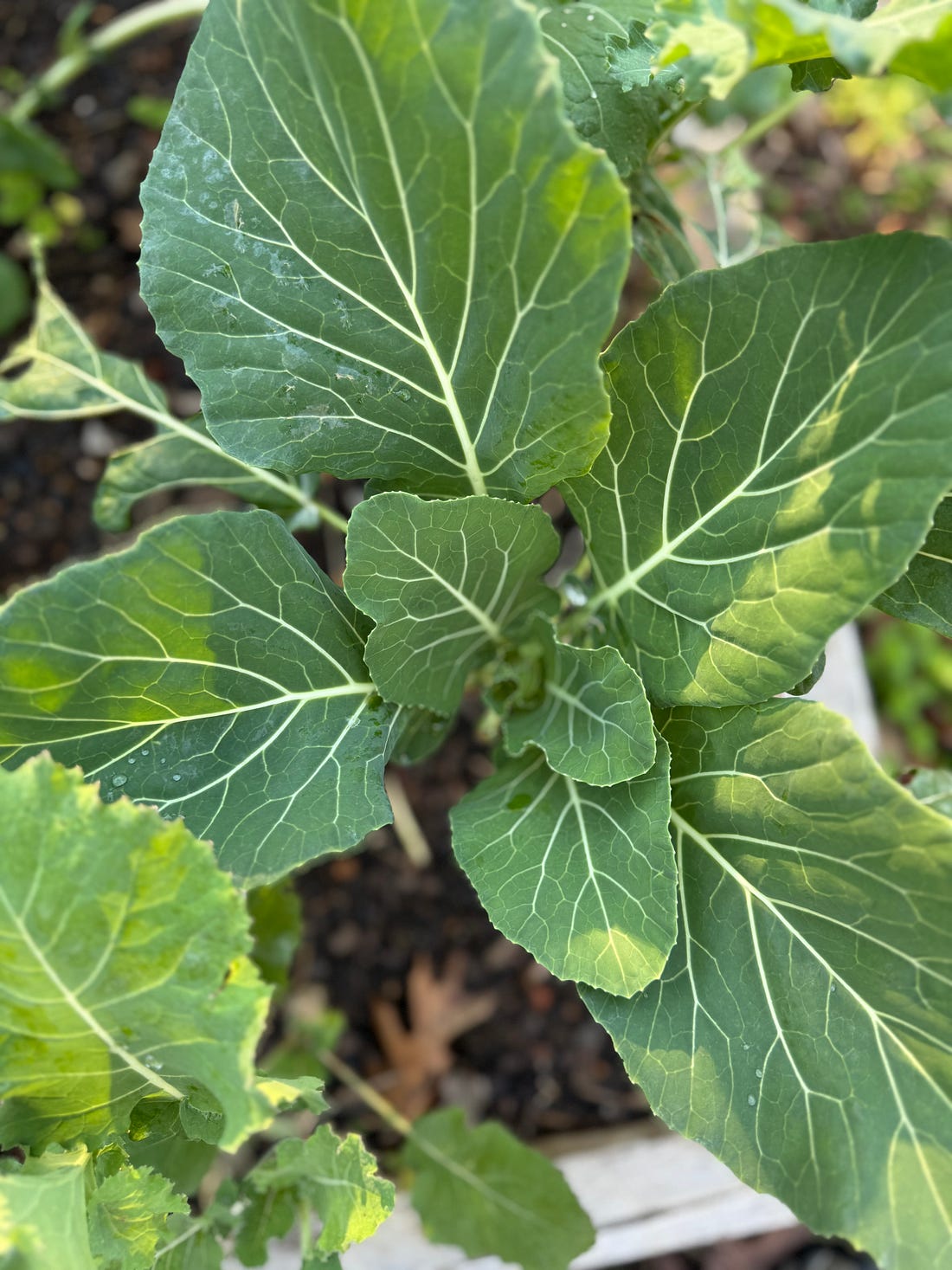
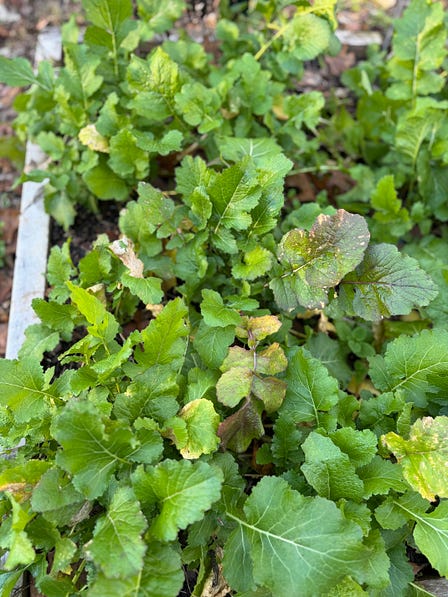
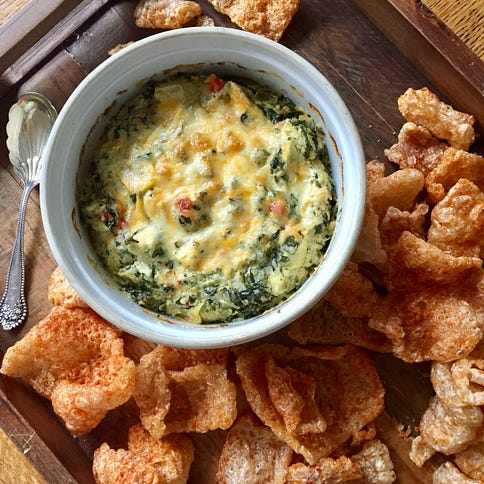
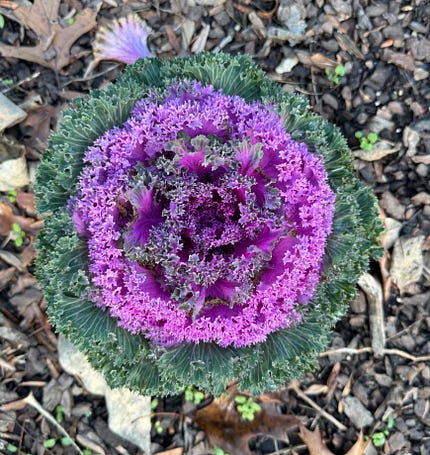
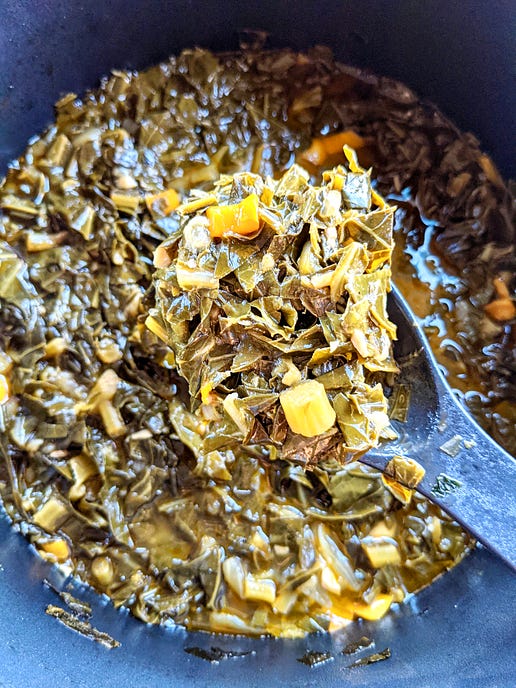
Now onto those greens, the first food of the new year. Braised collard or turnip greens have been a part of my New Year’s Day for as long as I remember. They’ve been slowly simmering in a pot at the back of the stove promising prosperity in the days ahead. Black-eyed peas are their sidekick, and they are said to bring good luck. Up until three weeks ago, my green garden was flourishing. But dipping temps zapped my arugula and romaine. What remains are the hearty greens, the resilient ones like collard, kale, mustard, turnip, and cabbage. They’re thriving, a little frost-bit, but mostly waiting to be cooked. So for this post, I gathered turnip greens and collards and cooked them in two pots, side by side, to taste the subtle differences. The turnip greens are tender, and I stripped the leaves from the tough stalks. After a slow cooking they tasted sharp, bitter, bracing, and wonderful. It is an acquired taste! My father adored turnip greens with halved hard-cooked eggs, in which the yolks were still a little soft and jammy. The collards, on the other hand, are meatier, more substantial, and fairly sweet. I chopped them coarsely. With both greens, and all greens, I have a light hand and begin with a saute of onion and garlic in olive oil, adding ham only if I have good country ham. Sometimes I use chicken stock instead of water. Always very little water. My method is shared at the end of this post. And that’s just your basic cooking of greens. You can treat winter greens in recipes as you would fresh spinach. After cooking them, toss with a little cream cheese and shredded Fontina cheese and warm in a skillet to serve with crusty bread. Or, make a New Year’s Day artichoke dip out of them, perfect for serving with hot sauce and tortilla chips while you’re watching college football.
I used to live in Atlanta and drive by an old neighborhood called Cabbagetown. The name comes from the fact that these Irish immigrants and mill workers had a small plot of land in front of their row houses, and it became customary to grow cabbages in the front to feed the family. Plain, simple greens have fed people in Cabbagetown and the world over. They have been signs of hope. They’re vitamin and calcium-packed. They’re going into my New Year’s pot and come to think of it, I’m going to cook them all year long. I’m grateful for my garden, for spring peas and summer tomatoes and okra that continues to bloom and burst into pods into the fall. I’m grateful for all of you who read my recipes and stories and share your own via the comments. I’m grateful to still be writing about food more than four decades after I began!
In 2026, I plan to travel, taste, and read. Books I enjoyed this year were James, by Percival Everett, The Correspondent, by Virginia Evans, The Land of Sweet Forever, by Harper Lee, The Great River, by Boyce Upholt, and Thomas Jefferson: The Art of Power, by Jon Meacham. What have you been reading?Also, my friend Jimmy Proffitt has written a first cookbook about growing up in Appalachia. It’s called Seasoned in Appalachia if you’d like to learn more about Leather Britches, Peanut Butter Fudge, and the foods and customs of the mountains. In March 2026, I’m giving a TED Talk in Athens, Georgia, exploring the power of recipes to connect us. I’ve had the privilege of working alongside university students to craft my talk and learn from them as well. Ever hopeful, always the optimist, I say we give it our best this coming year. Let’s fortify ourselves with good food and kindness, not forget what is happening around us, and then speak up and speak out. I’ll bring the recipes. Happy New Year! - xo, Anne What lifts you up and gives you hope?
THE RECIPES: How to Cook Greens Like a SouthernerMost Southerners make the terrible mistake of boiling greens to death. The recipes are out there—you flavor cooking water with hog jowl or streak of lean (smoked fatty pork) and then add the greens. My family’s recipe for greens is the inverse of this method. We add only what liquid is needed to keep the greens resting on a bed of water, and no more. What results is a much more concentrated “pot likker.’’ I learned this from Anna Pulliam who cooked for our family once a week while I was growing up in Nashville. She came to our house to clean and cook and added so much joy to our lives. She listened to gospel music while she ironed. She fried chicken and taught my mother how to cook greens the right way, in as little water as possible. Anna would wash the greens multiple times because you need to get rid of any dirt or sand, then she’d pull off the tough stems, and she’d pile the wet greens into a pot and only add 1 cup of water. The pot was covered, the heat was low, and those greens simmered until tender, with you checking on them and adding a little more liquid if needed to keep them from sticking to the pot. I cook greens by Anna’s method beginning with about 8 cups of washed greens (collards, turnip, mustard, kale) to about 1 cup water. But first in the pot I pour a couple tablespoons of olive oil and saute a little onion and several cloves of garlic. You could add a sweet or hot pepper as well. Then, you pile in the greens. Anna might have added a little smoked pork. Now, add the liquid—water or chicken stock. Season with salt and pepper. Cover the pot, stir often, and simmer on low until tender, which really depends on the type of green and how tender it is. Backyard greens cook more quickly than store-bought. To speed up the process, chop the greens. Allow about 45 minutes to 1 hour, and watch the liquid in the pot. Collards tend to need a bit more water to get done than kale or turnip greens. If you have much water left in the pot after the greens are cooked, remove the greens, and fire up the stove under the pot to let the liquid reduce by half and pour this over the greens. Serve with vinegar or halved hard-cooked eggs. Warm Collard Green and Artichoke DipIf you are using fresh collard greens, wash them well, drain and finely chop. Place about 5 cups fresh greens in a saucepan with about an inch of chicken stock or water. Cook until tender, about 15 minutes. Drain well and let cool. Measure out 1 packed and generous cup of collard greens to use in this recipe. Or, use one package (10 ounces) frozen chopped collard greens or spinach, thawed and drained well. Makes 10 to 12 servings (about 4 cups) Prep: 20 minutes Bake: 25 to 30 minutes
1. Place a rack in the center of the oven, and preheat the oven to 400ºF. 2. Place the cooked greens in a colander or sieve set in the sink, and press down with a large spoon to press out all the water. Turn the drained greens into a large mixing bowl. Add the artichoke hearts, cream cheese, Parmesan, sour cream, mayonnaise, red pepper, and seasoning salt. Stir to combine well. Spoon the dip mixture into a 5- to 6-cup souffle dish or an 11- by 7-inch glass baking dish. Scatter the shredded cheese over the top. Place the pan in the oven. 3. Bake the dip until it is bubbly, about 25 to 30 minutes. Remove the dish from the oven, and serve warm with hot pepper sauce or pickled jalapeno peppers and with corn chips or pork rinds. You’re on the free list for Anne Byrn: Between the Layers. If you’re liking what you’re reading, why don’t you become a paying subscriber for more recipes, stories, and content.
|







0 comments:
Post a Comment