


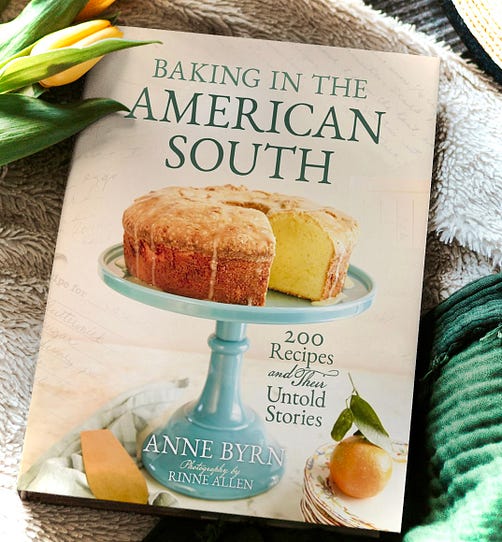
Thank you for reading Between the Layers! Please enjoy and share this free post with your friends. Happy PUB DAY, Baking in the American South! 🎈🎉📕Why I wrote this book + follow me on tour + Lemon Icebox Pie cools things down
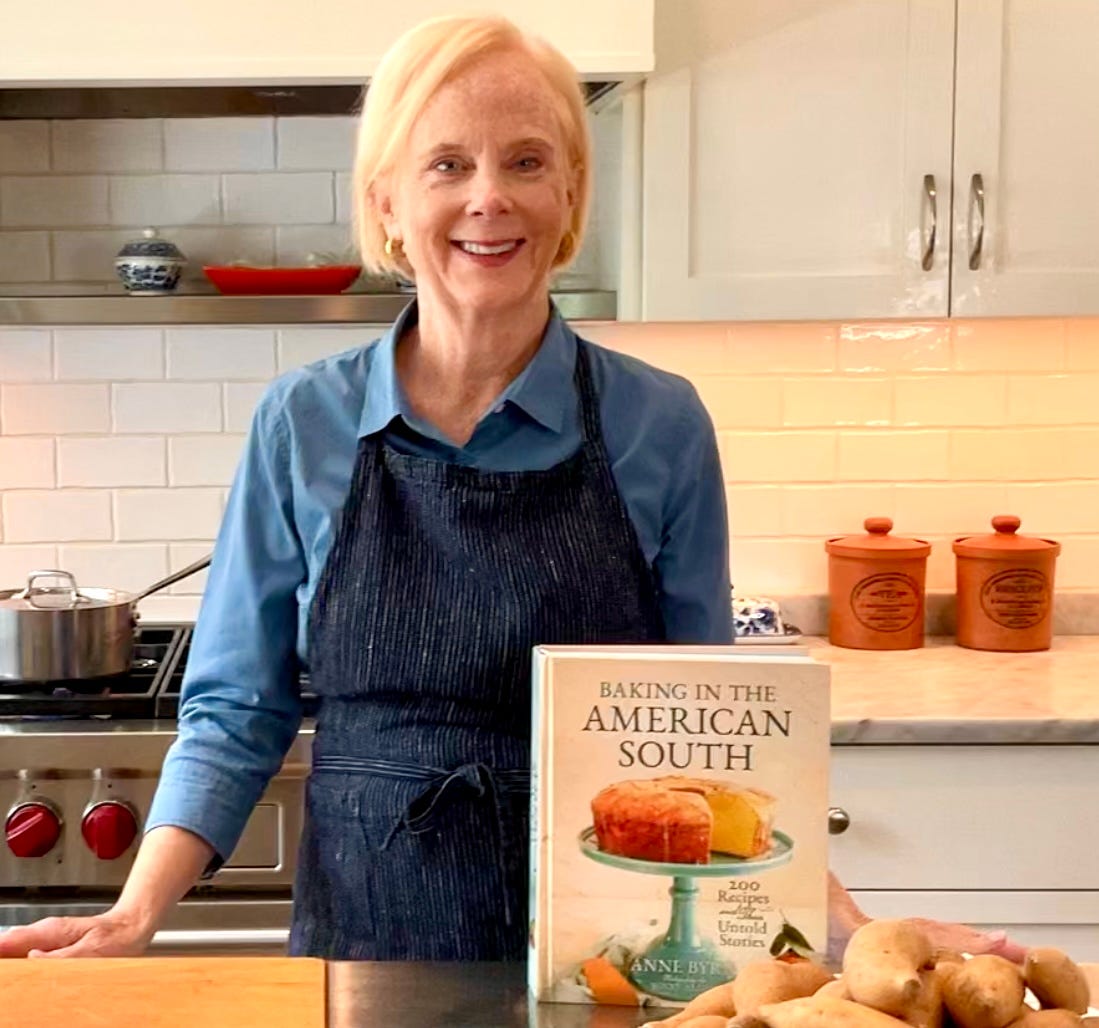
YESTERDAY, I WAS IN THE KITCHEN baking a sweet potato cake and sliced sweet potato pie from my new book for a digital media appearance that will air in early October. If you had told me 25 years ago when my Cake Mix Doctor book released that I would be reaching audiences in this virtual way one day, I wouldn’t have believed you. And yet, anything is possible. Today marks the birth of my new book, Baking in the American South! For the past three years, it has lived alongside me. I have been informed by it and now understand more deeply the region I call home. I wrote this book full of 200 fabulous recipes and untold stories of famous people and not-so-famous ones because I was curious what recipes could tell me about Southern culture.
I wanted to write about people seen and unseen and from the past and present. I wanted to dig deeper and go further than Southern cookbooks have before. I sensed Southern baking was the best in the land because its pies, puddings, cakes, and biscuits taste superior to those baked elsewhere. But after the research, I learned that Southern baking was the first and finest style of baking America has ever known in spite of the fact that it was often rooted in scarcity and has simply fed people. Southern baking involves working through the South’s warm climate and getting used to sticky bread doughs and the effects of humidity. It is both an art and an economy. It has paid the rent. Whether out of love or because they were forced to, Southern cooks have baked the cakes and rolled the pie crusts on farms where they grew many of their ingredients. Virginia author Edna Lewis writes in her Taste of Country Cooking cookbook that corn pone batter was stiff and formed with both hands in an intimate fashion— ‘’fingers closed to make a large egg shape.’’ Those finger indentations left the marks of the maker baked into each corn pone. You might wonder how I wrote this book.In the beginning, I compiled a list of ‘’must have’’ recipes such as strawberry shortcake, salt-rising bread, spoonbread, skillet cornbread, banana pudding, fritters and beignets, yeast rolls, Sally Lunn bread, Hummingbird Cake, black bottom pie, and blackberry cobbler. I also researched each of the 14 states and spoke to people in those states to gauge what unique recipes needed to be in the book. From there I listened to stories, read books, accessed archives, and took a big picture look at the South and considered how railroads, poverty, isolation, slavery, migration, and many other factors including agriculture affected what people baked. It was an ongoing project for more than three years. It consumed me, for sure!
A story in the first chapter on cornbread stands out as a favorite.The Nina Cain’s Batty Cakes recipe is named after Nina Cain who cooked for Curtis Flowers’ family in Florence, Alabama for many years. I read about Curtis Flowers and her connection to Nina Cain in a newsletter published by the Colonial Dames of America. Flowers was discussing how her great-great-great-grandfather had owned slaves to work cotton fields prior to Empancipation. Author Alex Haley encouraged her to make the names of the enslaved available at her public library because family records can be fonts of information for families searching for their stories. Flowers spoke to me how she couldn’t erase the fact her ancestor was a slave holder, but she could shed light on the names of the enslaved to honor their lives. This cornmeal griddle cake recipe was something Nina Cain was known for. The little lacy corn cakes are about the size of a silver dollar, and she fried them in hot lard. I also learned how important buttermilk was to cornbread. You need a lot of it in a recipe, and if you have the time to let the cornmeal soak in the buttermilk ahead of time, it makes a creamier cornbread. And until this book, I didn’t really understand the role of high heat in baking biscuits, either. If the oven is very hot - 475 to 500ºF - the biscuits rise higher in the pan.
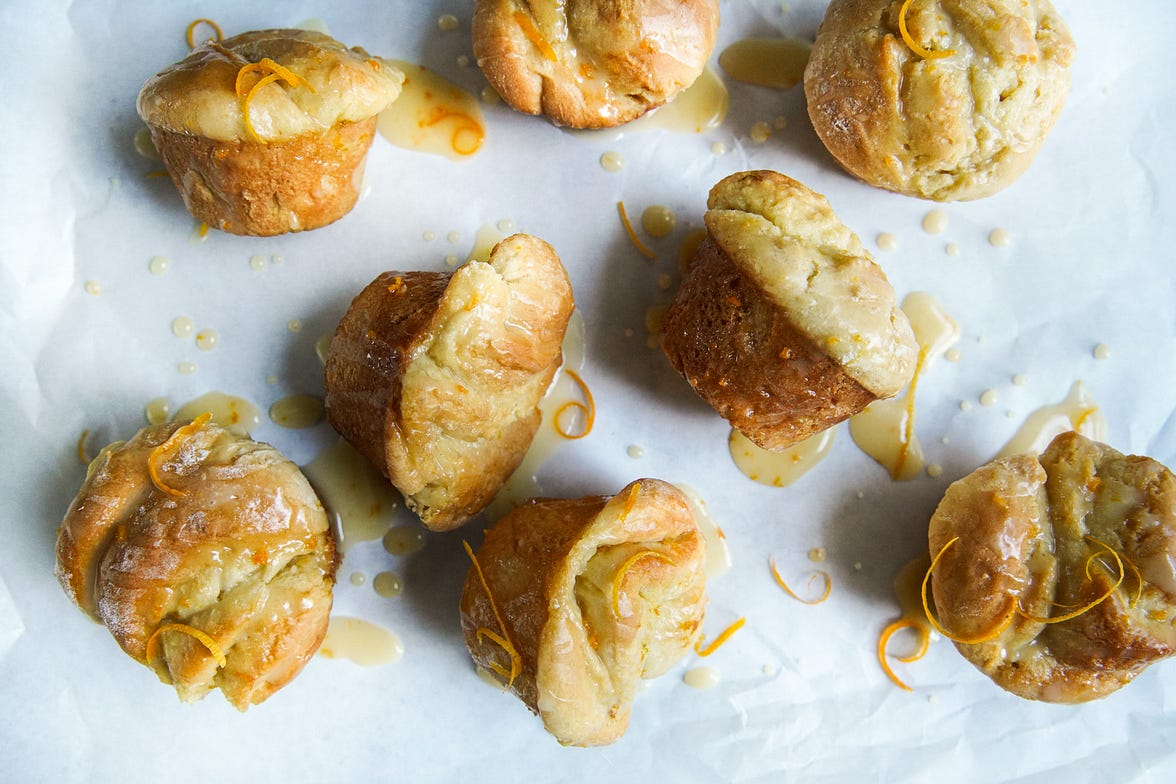
Hopeful I could uncover recipes that were near-forgotten or simply hyper-regional, I found Possum Pie (chocolate custard buried under whipped cream) and a Chocolate Tomato Cake, both from Arkansas. I had never heard of a pie made from ripe cantaloupe either—a railroad recipe—but it is delicious! And I am obsessed with Ewing Steele’s Alabama Orange Rolls. They became our Christmas morning treat one year. It’s a beautiful story behind this recipe. Ewing Steele was a caterer in Birmingham, and she worked in the kitchen with young German prisoners of war during World War II.
Perhaps the biggest challenge in a book this size is finding, testing, and adjusting historical recipes so they work today. We can only guess what type of flour or sugar might have been used in an older recipe. And even if grandmother’s cake called for Swan’s Down cake flour, the formulation might be different today than it was a century ago. As our measurements have changed, I included cups as well as grams because many home cooks bake with a scale today. But grandmother likely had her own flour scoop and knew how she measured a cup—level or rounded—or possibly she didn’t measure at all! In addition, tastes have changed over the years. What might have been considered delicious in the 1930s may seem spartan today. I found this to be the case in making chocolate cake. Our palates today can withstand a lot of chocolate, but older recipes had a more modest hand.
Now what?I’m going on book tour, something I’ve grown accustomed to as I have promoted each of my previous books. This is my 16th book! With the Cake Mix Doctor, I was thrown onto local morning TV, QVC, and even Good Morning America. The newspaper interviews came easy because I could anticipate tough questions. Radio, I found, had a cadence and you needed to speak in sound bites. Podcasts, I’ve grown to love, because they are more conversational and relaxed. Even as Covid made book marketing more virtual, I have been a reluctant camera gal shying from the spotlight. But I understand now the beauty of an iPad, a tripod, a ring light, and extension cords snaking through my kitchen in order to teach a class online.
Because this book focuses on just one region of America, I’ll be able to travel to nearly 30 cities by car. Three book festivals require a plane ticket. But mostly, it is an honest-to-goodness road trip. You can’t get to Oxford, Mississippi from my hometown without going through Memphis, so that’s the route I will take. And once in Oxford, I might as well head south to Jackson and the Mississippi Book Festival. And if I’ve gone that far, it’s just a little further to New Orleans. Especially if I can stop for lunch with Instagram phenom Landon Bryant in Laurel, which is what I plan to do. I’ll share plenty of stories from the road here in Between the Layers and on Instagram. And I hope I get to meet you along the way! If you make it to my appearances on book tour, please introduce yourself and tell me you read Between the Layers. Are you coming to see me on tour? Are you planning to bake from my new book? If you pre-ordered, it might be delivered today!
Because this hot weather just doesn’t want to leave us, I am sharing a sneak-peek of Lemon Icebox Pie.In warm Southern climates, there was nothing more refreshing than a cool lemon pie in the fridge. It was that classic pie you’d make ahead of time with eggs, sweetened condensed milk, and lemons, and chill. Originally a 1930s French Creole recipe that came out of New Orleans and made its way up into the Delta of Mississippi and through Alabama and into Tennessee and other parts of the South, it was the pie once there was refrigeration. And that pie would travel to Denver, which is where cookbook author Adrian Miller’s mother baked it for church gatherings. Johnetta Solomon Miller was born and raised in Chattanooga, Tennessee, on lemon icebox pie. And so after she moved west and joined Denver’s Campbell Chapel African Methodist Episcopal church (which Adrian has jokingly said stands for ‘’always meet and eat’’), this sweet confection of tangy lemon filling on top of crushed vanilla wafers was what she made for church potlucks and whenever people came together to share food. Hope you enjoy the pie! Why should those of you outside the South be interested in my new book? What better way to understand the culture of the South than by baking its rolls, biscuits, pies, and cakes? We have more in common than we do differences, and food can be our connector. - xo, Anne P.S. The second winner of the paid subscriber giveaway is Laura Wyatt. A copy will be delivered to Laura this week! Congratulations!
THE RECIPE: Johnetta Miller’s Lemon Icebox PieThis recipe closely resembles the recipe on the back of the Eagle Brand milk can, Adrian Miller says, and was ‘’something my mother made for holidays throughout the year, not just the summer ones. It was the one dessert we kids coveted.’’ I loved Johnetta Miller’s simple recipe, and I made a couple of adaptations, adding another egg and placing the pie in the oven to bake a bit longer so you don’t have to worry about raw eggs. Makes 8 servings Prep & Cook: 30 to 35 minutes Bake: 20 to 27 minutes for crust and meringue Chill: At least 4 hours
You’re on the free list for Anne Byrn: Between the Layers. If you’re liking what you’re reading, why don’t you become a paying subscriber for more recipes, stories, and content.
|










0 comments:
Post a Comment