


Thank you for reading Between the Layers! Please enjoy and share this free post with your friends. Zuni Chicken: French Technique + American Ingenuity 🇺🇸 🇫🇷 - No. 293Happy Fourth of July, America! Plus, a tribute to Judy Rodgers
WITH ALL EYES ON THE SUMMER Olympics in Paris this month, I considered writing about ratatouille, maybe an onion tart, or a nice French omelet. But it’s also the week of July 4, so whatever I write in this space has to feel American, possibly revolutionary, and be absolutely delicious. That shouldn’t be so difficult, what with the long connection between the two countries. The French helped win the American Revolution, providing supplies, arms and ammunition, uniforms, troops, and naval support to the beleaguered Continental Army. Their combined victory at Yorktown, Virginia, ended fighting in the American colonies. And Lady Liberty herself was a gift from France. The Statue of Liberty, dedicated in 1886, is recognized as a symbol of freedom and democracy around the world.
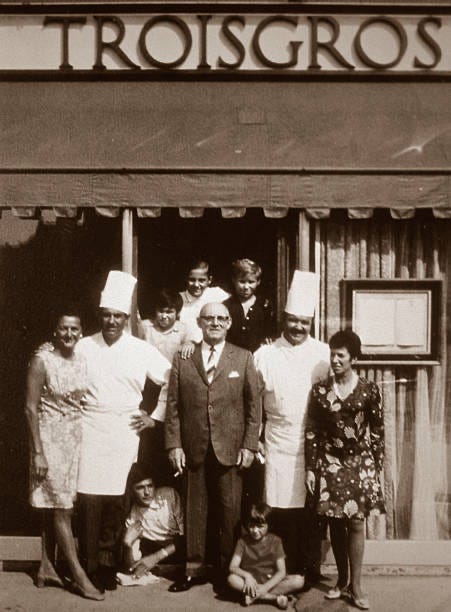
But there’s a story with an American-French connection you might not be aware of.It involves a St. Louis-born chef named Judy Rodgers who as a junior in high school would travel abroad and eat an unassuming ham sandwich prepared by a famous French chef. After that, the direction of her life changed. A neighbor of Rodgers’ family traveled to France often on business and knew the family who owned a hotel in Roanne, in east-central France, an hour north of Lyon. He arranged the 1973 exchange between Rodgers, who was studying French in high school, and the daughter of the hoteliers. Fatefully, attached to the hotel was a Michelin three-star restaurant called Les Frères Troisgros, the home of superstar chefs Jean and Pierre Troisgros, where Rodgers would study French cooking. Not that she would pare a vegetable or shape a delicate quenelle for their well-heeled clientele. She would taste ingredients and take careful notes. She would visit the home kitchen of the Troisgros brothers’ sister Madeleine who showed her how everyday French regional cooking uses leftovers and is taken just as seriously as haute cuisine. For a teenager whose first experience with food had been working at the local Dairy Queen, Rodgers must have been blown away by the French passion for good food. Her first meal on French soil was a rest-stop ham sandwich on a stale baguette while traveling seven hours from Paris to Roanne with Jean Troisgros. To defend the honor of French cuisine, Troisgros went into the kitchen upon their arrival after midnight and made her a proper ham sandwich ‘’on chewy, day-old pain de compagne [with] a spoonful of very spicy mustard, tarragon-laced cornichons, and a few sweet, tender crayfish as an hors d’œuvre,’’ she wrote in the introduction to The Zuni Cafe Cookbook (2002). They ate standing in the dark, silent kitchen with only the aroma of veal stock reducing to a demi-glace in the background.
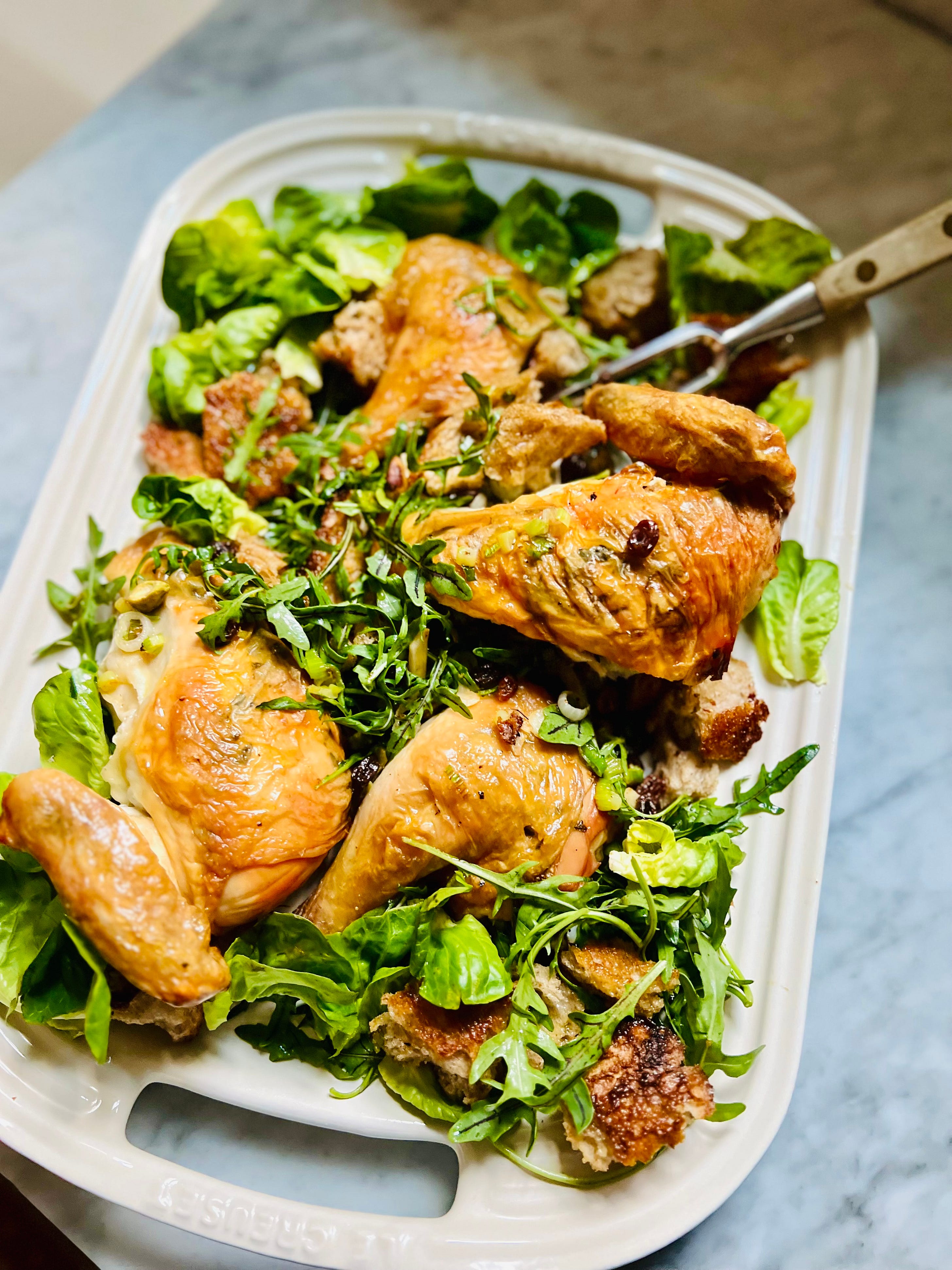
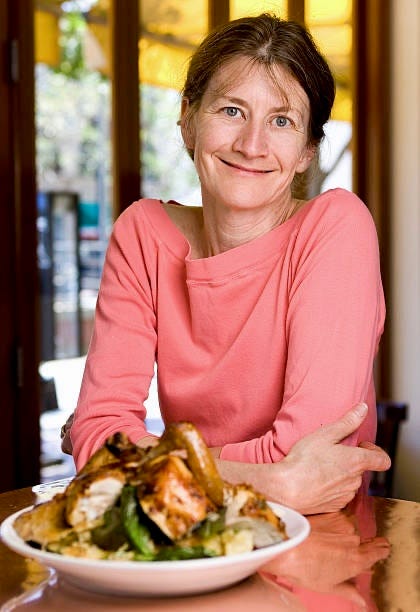
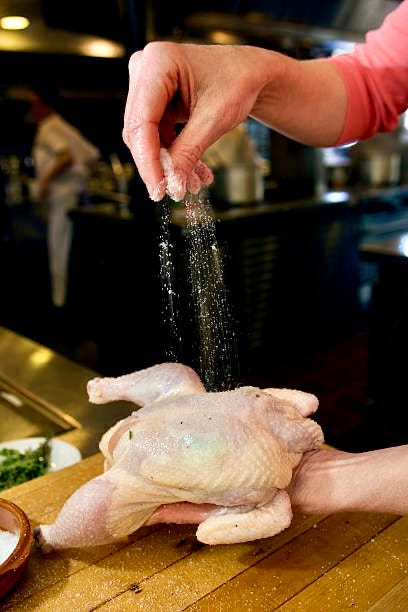
Rodgers would return to St. Louis in love with French cooking, eager to cook for her family, and searching for crème fraîche and slender green beans in the American supermarket.That’s when the real lesson hit home: A great recipe begins with the right ingredients. She would attend Stanford University, and after graduation a friend introduced her to Alice Waters of Chez Panisse who hearing Rodgers had spent a year with the Troisgros brothers and had 100 pages of kitchen notes, asked her to come help cook lunch on Saturdays. After leaving Chez Panisse in Berkeley, Rodgers traveled abroad to work in Italy and southwestern France and then back to California restaurant kitchens. She became the chef of Zuni Cafe on Market Street in San Francisco in 1987, a bustling neighborhood sort of place already known for its Caesar salad, guacamole, and festive drinks. Rodgers convinced the owners to build a wood-fired brick oven so she could introduce more Mediterranean flavors to the menu. As Los Angeles Times food critic Russ Parsons wrote, it was the heyday of California cuisine. ‘’Get good ingredients and get out of their way.’’ One day, feeling overworked and under the weather, Rodgers suggested to the kitchen they’d just roast some chickens for dinner and serve them over a warm Italian Panzanella-style of bread salad without the tomatoes. She salted the chicken a few hours ahead of time, thinking it might tenderize in the same way it helps with fried chicken. After that night, the chicken with crispy skin was so wildly popular that Zuni placed it on the menu and it’s never left.
Do try this recipe at home.Judy Rodgers and I were born the same year. When I read her story, I naturally thought back on what I was doing and cooking at the same time. When she was in France tasting foie gras and beurre blanc at the genesis of the nouvelle cuisine movement, I was in high school reading Shakespeare, editing a school newspaper, and taking the family car for drives whenever I got the chance to get out of the house. I baked cookies for friends, birthday cakes for my family, and clipped recipes from magazines. We were in different parts of the world, and yet, we both loved food and probably had much in common. When Rodgers was the chef at the iconic Zuni Cafe in the 1980s and creating that legendary chicken, I was the food editor of the Atlanta Journal-Constitution. I had traveled to San Francisco just two years before and met her at a conference about ‘’new American food.’’ She was one of those game-changing chefs stacking shoestring potatoes a foot high, leaning into locally grown, organic vegetables, and riffing on the flavors and techniques of Italy and France. But Rodgers’ life was cut short in 2013 when she died after a year-long battle with appendix cancer. She was just 57. America has lost so many great regional chefs—Paul Prudhomme, Lena Richard, and Karen Barker, for example. They’re not household names, but that doesn’t mean we don’t remember them every time we pull out their recipes.
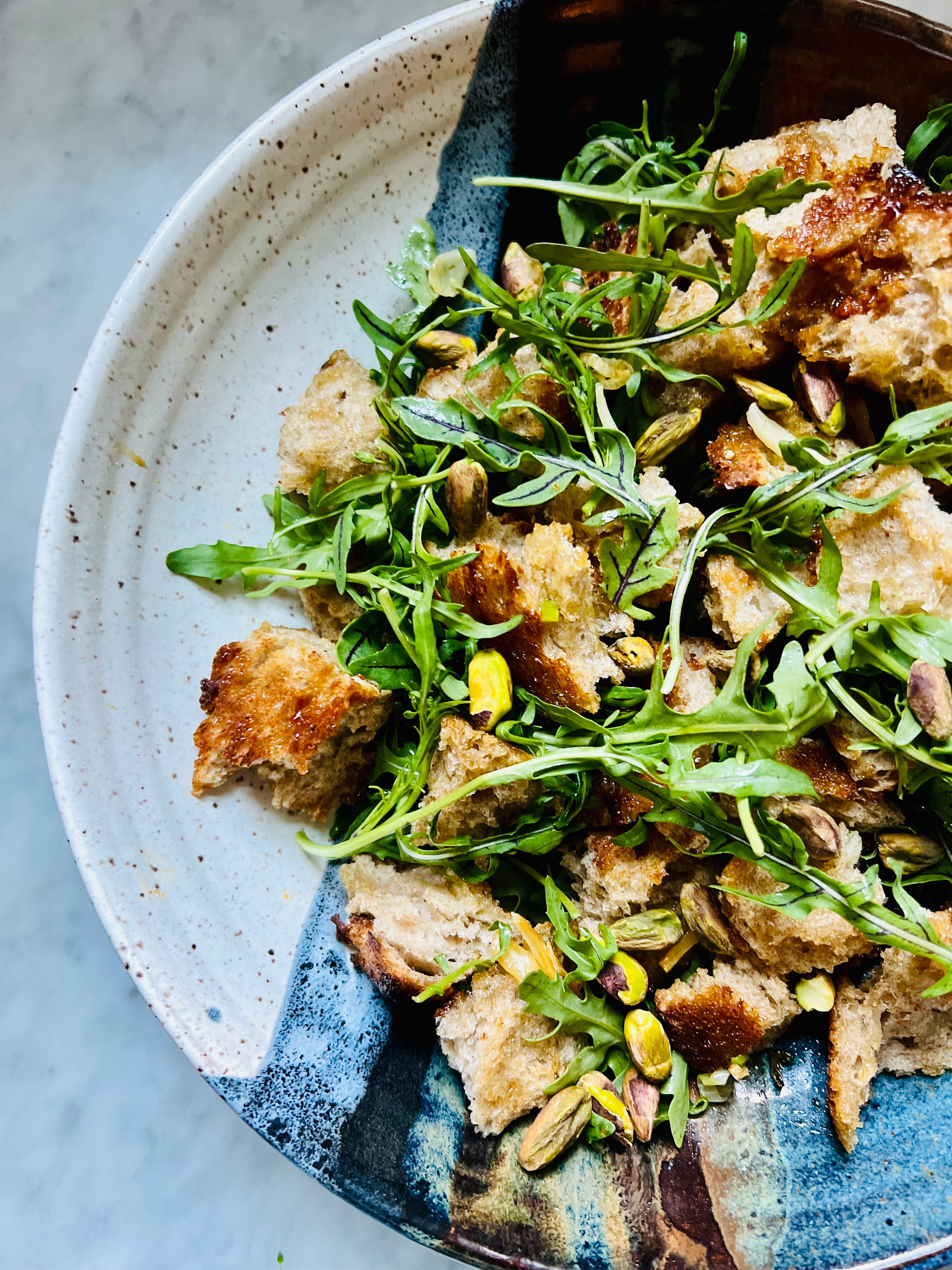
The four-page, no-compromise, absolutely revolutionary way that Judy Rodgers carefully detailed this chicken in her Zuni cookbook is, no doubt, French. It calls for salting the chicken two days in advance and letting it rest in the fridge, tucking fresh herbs under the skin, and roasting it at such a high heat that the skin crisps and blisters and the meat stays moist and tender. It’s precision, and yet, it’s everyday enjoyment. When my husband and I forked into her chicken, we were silent, almost prayerful, for several minutes. He uttered something like ‘’we need to make this more often.’’ And so do you. Judy Rodgers couldn’t begin a recipe without knowing who grew the vegetables, raised the chickens, and baked the bread. It was the idea of community she had learned in France with the Troisgros brothers who would gather in their kitchen and taste sauces and correct them via ‘’collaborative genius.’’ If you prepare her bread salad to go alongside the chicken, you might be able to taste the pan drippings tossed in, something a French grandmother or a Michelin-starred chef would never, ever forget. Happy Fourth! Happy Cooking! Happy early Bastille Day! - xo, Anne Do you know the Zuni chicken recipe? What’s your favorite way to roast a chicken?
For more holiday reading, here are some links:
THE RECIPE: Judy Rodgers’ Zuni Roast Chicken with Bread SaladMy recipe is an adaptation of Judy Rodgers’ famous chicken. If you love this recipe, you should find a copy of her book so you can read the recipe in her own words. I made a few, tiny shortcuts here and there. I know she doesn’t want sourdough bread in the bread salad—I’m guessing because it’s so strongly flavored—but that was all I could find, and we loved it! Soaked in red wine vinegar, the currants are the star. I doubled the amount in her recipe, but I wasn’t going to pay the price for Chinese pine nuts, so I substituted pistachios, which were lovely. If you can find real Italian pignoli and they don’t cost an arm and a leg, do it! And lastly, I was worried my chicken was too large for her specifications—about 3 1/2 pounds. But I followed the directions, and the skin crisped and the chicken was tender and cooked through in 1 hour, 15 minutes. I did remove the backbone before roasting, which speeds the process and allows the chicken to roast skin-side up the entire time in a cast iron skillet. Makes 4 servings A small chicken (2 3/4 to 3 1/2 pounds) 1 1/2 tablespoons kosher salt (use 3/4 teaspoon per pound) Sprigs of rosemary, thyme, or fresh sage 12 to 16 ounces open-crumbed, chewy, peasant style bread, crusts removed Extra-virgin olive oil for brushing the bread (2 to 3 tablespoons) Vinaigrette: 1 1/2 tablespoons white wine vinegar 1/4 cup extra-virgin olive oil Salt and pepper to taste Currants: 2 tablespoons currants 2 teaspoons red wine vinegar 2 tablespoons warm water 2 tablespoons pine nuts or pistachios 2 to 3 cloves garlic, peeled and thinly sliced 1/4 cup sliced green onions (white and green parts) 1 tablespoon olive oil 1 to 2 tablespoons tap water 4 cups lettuce leaves (Boston, Bibb, Romaine, arugula) Freshly ground black pepper
You’re on the free list for Anne Byrn: Between the Layers. If you’re liking what you’re reading, why don’t you become a paying subscriber for more recipes, stories, and content.
|











0 comments:
Post a Comment