


Thank you for reading Between the Layers! Please enjoy and share this free post with your friends. Red Drinks for Red-Hot Days - No. 291A blushing strawberry lemonade, festive Juneteenth style hibiscus and pineapple punch, and a strawberry and hibiscus tea + the easiest peach pie ever
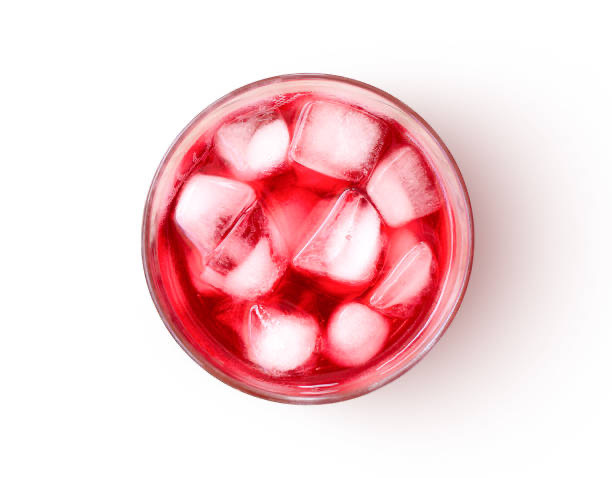
IF YOU GLANCE AT THE SCORCHING WEATHER map, you’ll see red. Temperatures across America and much of the world have soared to their highest marks in years. So it was good timing, perhaps, that I was concocting refreshing red drinks this week—a strawberry lemonade as well as two hibiscus elixirs, one with pineapple and one with mint. Red has fascinated me ever since I learned about how food was colored before there were artificial dyes. Berries, seeds, and dried flowers like hibiscus are some of the world’s oldest red dyes, and one of the strangest is certainly cochineal, a South American beetle that contains carminic acid and has been used to dye clothing scarlet red. The insects produce the acid as a deterrent to predators, and the valuable ground powder was discovered by the Aztecs and Mayans and once traded around the world where it made its way into recipes. More recently, scientists have been creating carminic acid in the lab. It’s called Red Natural 4, and it just might be in some of the foods you buy today. So between the bug thing, the lab-created red dye, and the cancer-causing concern of red dye No. 40 (and how it makes children hyperactive, according to Cleveland Clinic)—I’ve lost my appetite. But red drinks with natural dyes? That makes me thirsty. Think of them as old-school, modern, and a nice nod to Juneteenth.
How red drink became the beverage of JuneteenthThough the Emancipation Proclamation went into effect on Jan. 1, 1863, it wasn’t until two and a half years later, on June 19, 1865, that enslaved people in Texas found out about their freedom. In Texas, Juneteenth was recognized as a state holiday in 1980, and it became a federal holiday three years ago and is celebrated tomorrow. Denver author Adrian Miller, who wrote the book, Soul Food: The Surprising Story of an American Cuisine, One Plate at a Time, says red drinks, watermelon, and barbecue are the quintessential foods of Juneteenth. And red drinks get the attention because of their color—the vibrancy, how they say celebration, and how many believe they symbolize the blood of the enslaved. No doubt in older Southern cookbooks you will find vinegary shrubs of strawberry, boozy cherry bounce made by soaking fresh cherries in the remnants of a liquor bottle, and sweet cordials of fresh raspberries. But the oldest and simplest red drink, Miller says, was just molasses and water. I know we think of molasses with a dark brown color, but Miller says the initial batch of molasses made from crushing sugar cane and extracting its juice varied in color from red to amber. And then there are the bottled versions of red drink thanks to entrepreneurs.
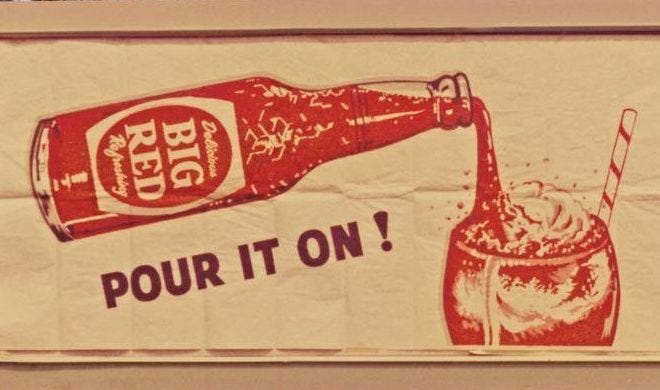
The first half of the 20th century was filled with red drink start-ups, including A.W. Leo, Tom Yates, and Ralph Harrison and their first Hawaiian Punch recipe created in a converted garage in Fullerton, California, in 1934. The most famous bottled red drink is Big Red, developed in Waco, Texas, in 1937 and first distributed in Louisville, Kentucky. With flavors of lemon and orange oils as well as vanilla, Big Red was so named in 1959 when the president of the San Antonio bottling plant overheard golf caddies calling it Big Red. It’s still made in Waco and distributed by Dr. Pepper. I didn’t grow up sipping a Big Red, but maybe you know someone who did? Joe Nick Patoski writes about Big Red in Texas Monthly in August 1986. Its color was the reddest liquid he’d ever seen, ‘’a red like the color of a fire engine speeding through hell but more intense.’’ Big Red, red Kool-Aid, and Hawaiian Punch might go along with ribs, beer, and watermelon for Juneteenth. And yet, I didn’t want to sip a red drink loaded with caffeine, Red No. 40, and sugar. So I ordered a big sack of dried hibiscus flowers from Amazon. Good thing the recipes were a success because I’ve got enough hibiscus to steep tea all summer!
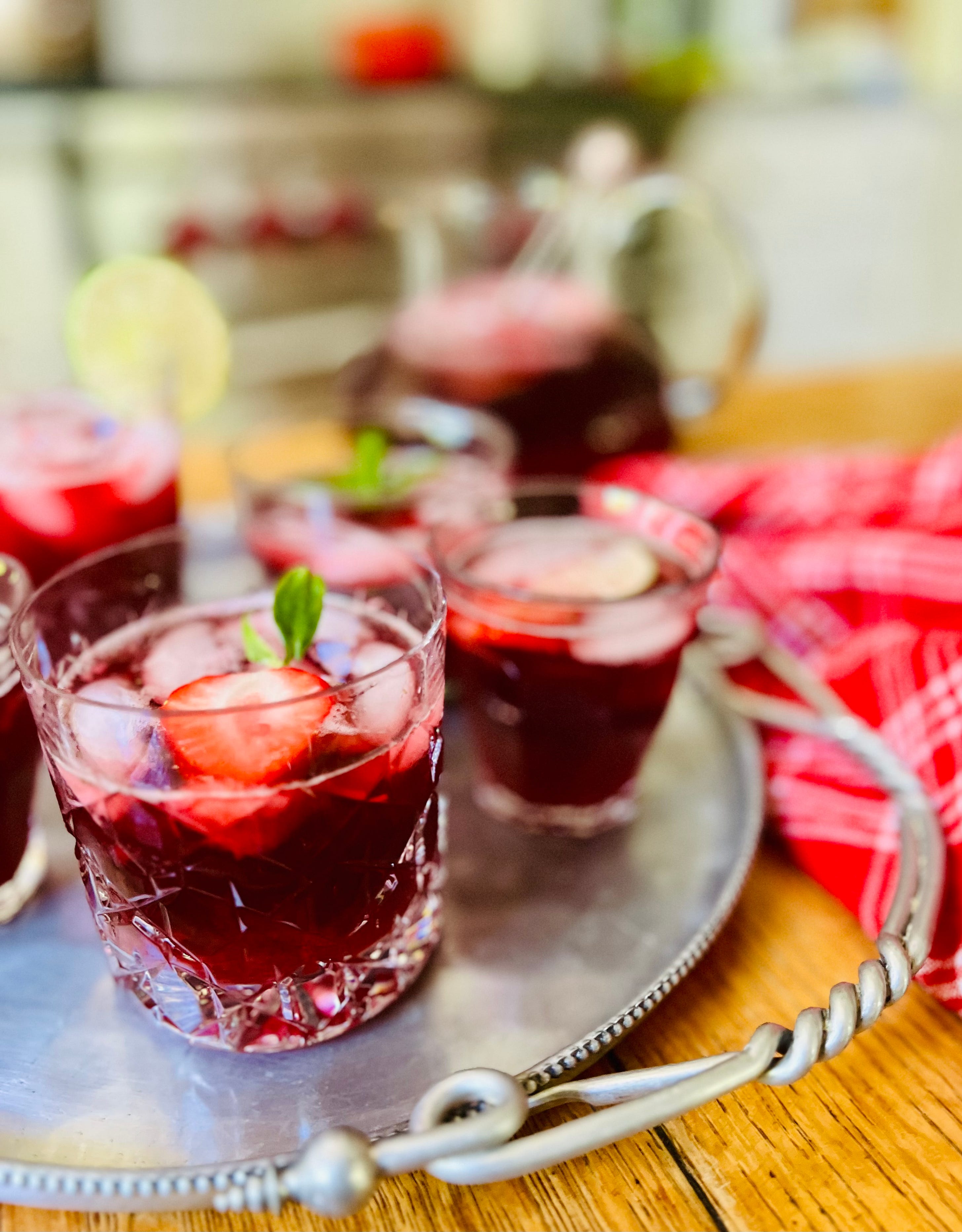
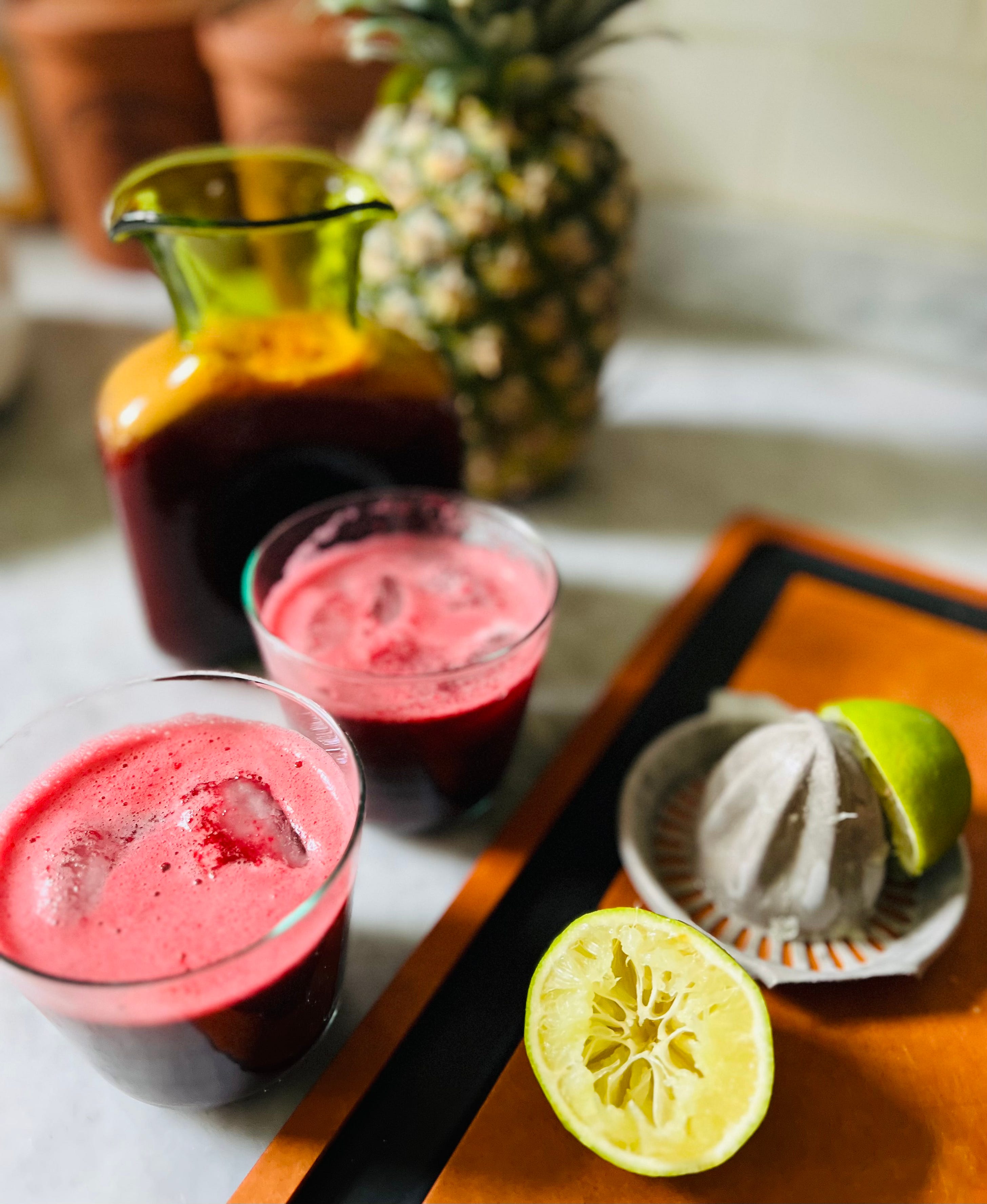
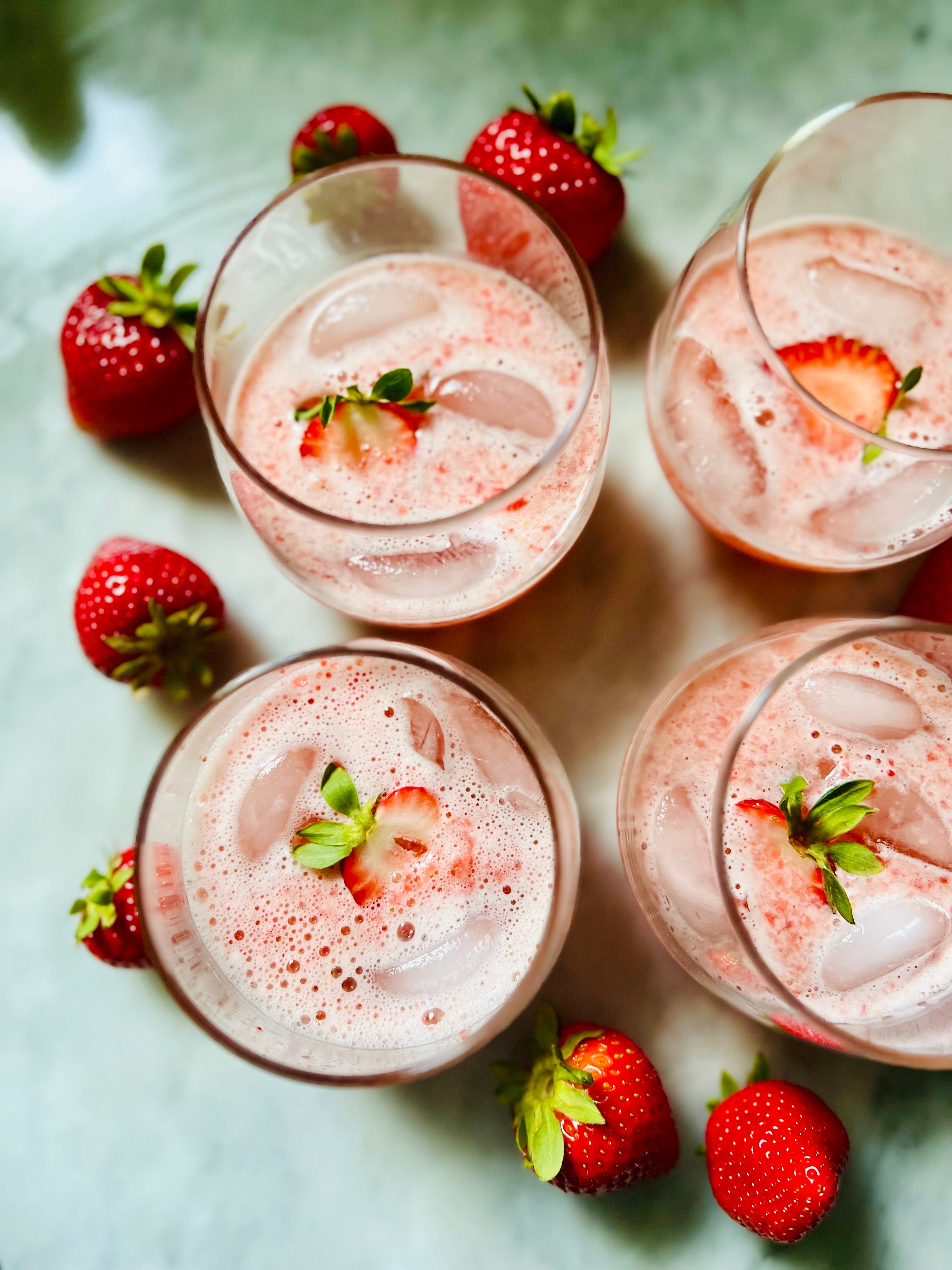
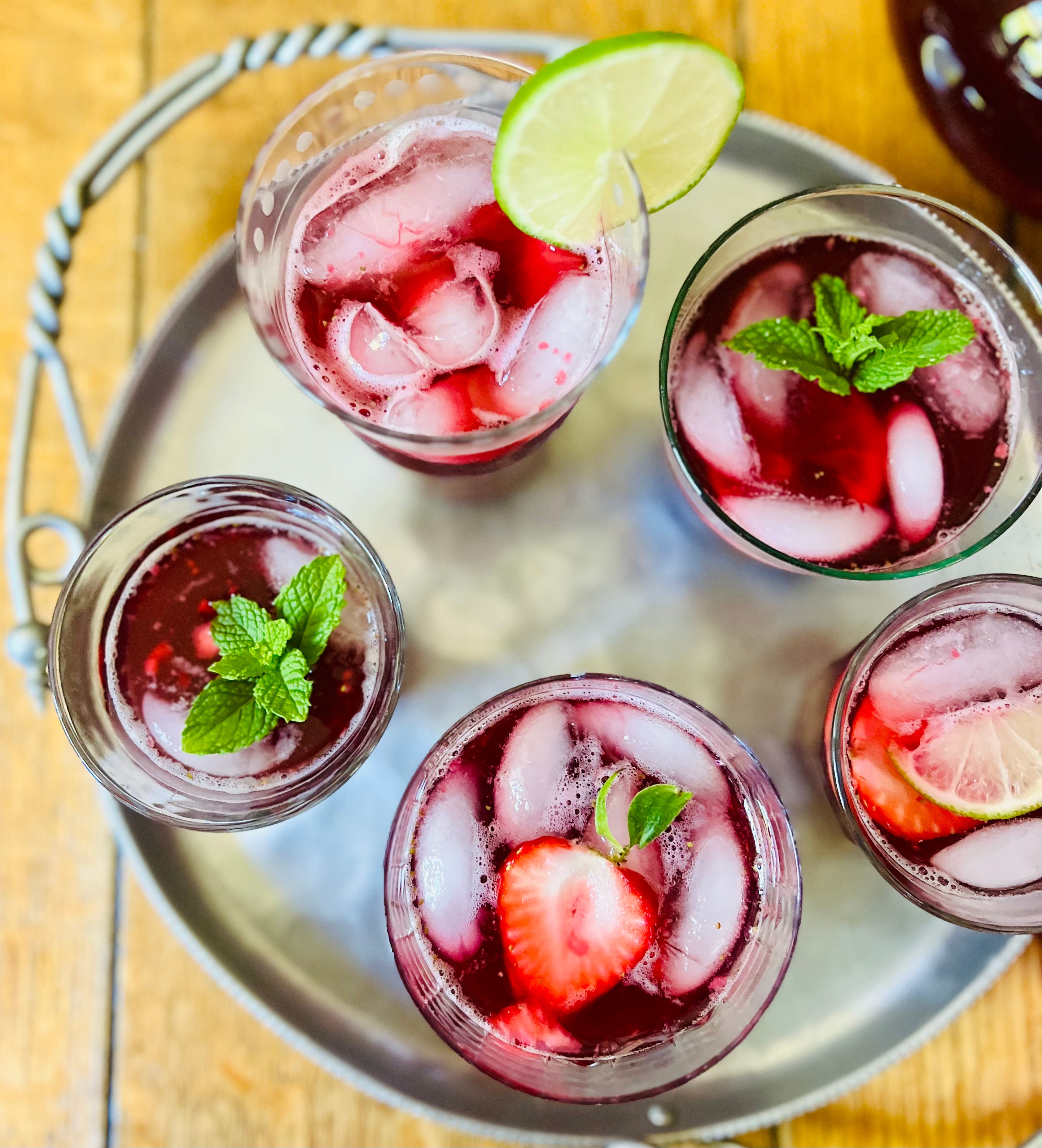
Jessica B. Harris as well as Taffy Elrod, an author of The Juneteenth Cookbook, say red beverages made from hibiscus or the kola nut originated in West Africa.The first red drink I created was a hibiscus tea punch with puréed strawberries and sweetened with a fresh mint simple syrup. It was fantastic! I had come across the recipe in the Holly Hill online blog where Kentucky chef Ouita Michel often reinvents older recipes. Hibiscus has a tart flavor which takes well to sweetness, either from sugar or honey or sweet fruits like strawberries and pineapple. It marries well with lime, too, and with mint. The proportions for making this tea were 12 parts water to 1 part dried hibiscus. So, with 1/2 cup hibiscus in a large bowl, I poured over 6 cups boiling water and let it steep about half an hour. The recipe is simple, refreshing, and it just might become your new iced tea. A second recipe added a Caribbean touch to hibiscus—fresh pineapple. You make a concentrated ‘’tea’’ of hibiscus flowers, combine that with puréed sweetened pineapple, and then add water to dilute and a touch of lime juice. Toni Tipton-Martin writes in her cookbook, Jubilee, that sorrel is the Caribbean name for hibiscus flowers, and sorrel teas like these are served at Christmas and often flavored with ginger, cinnamon, and cloves. In a third recipe I created what Adrian Miller calls ‘’circus lemonade,’’ or a naturally red lemonade flavored with strawberries, or in this recipe freeze-dried strawberries. Red lemonade used to be the favored beverage at the circus, he says. It’s a great recipe for making your own strawberry lemonade where you control how much sugar to add, and if you want to drop a few fresh strawberries in the glasses before serving.
The more I read and write about food, the clearer it is that new recipes are a way to learn about other people’s stories and cultures. Being aware of someone else’s way of life, their religion, how they gather, and what they eat, drink, and how they celebrate isn’t taking anything away from the way we live. If anything, it’s expanding our view, increasing our knowledge, yielding a new idea or a way of looking at things. Had it not been for this dive into red drinks and Juneteenth I might not have discovered the simple beauty of hibiscus tea. With all the name calling and the bitter and crude rhetoric fueling social media and politics today, it seems more important than ever to listen to stories we don’t know. And red drink just might be the most quenching drink you’ve made all summer. Keep cool! - xo, Anne
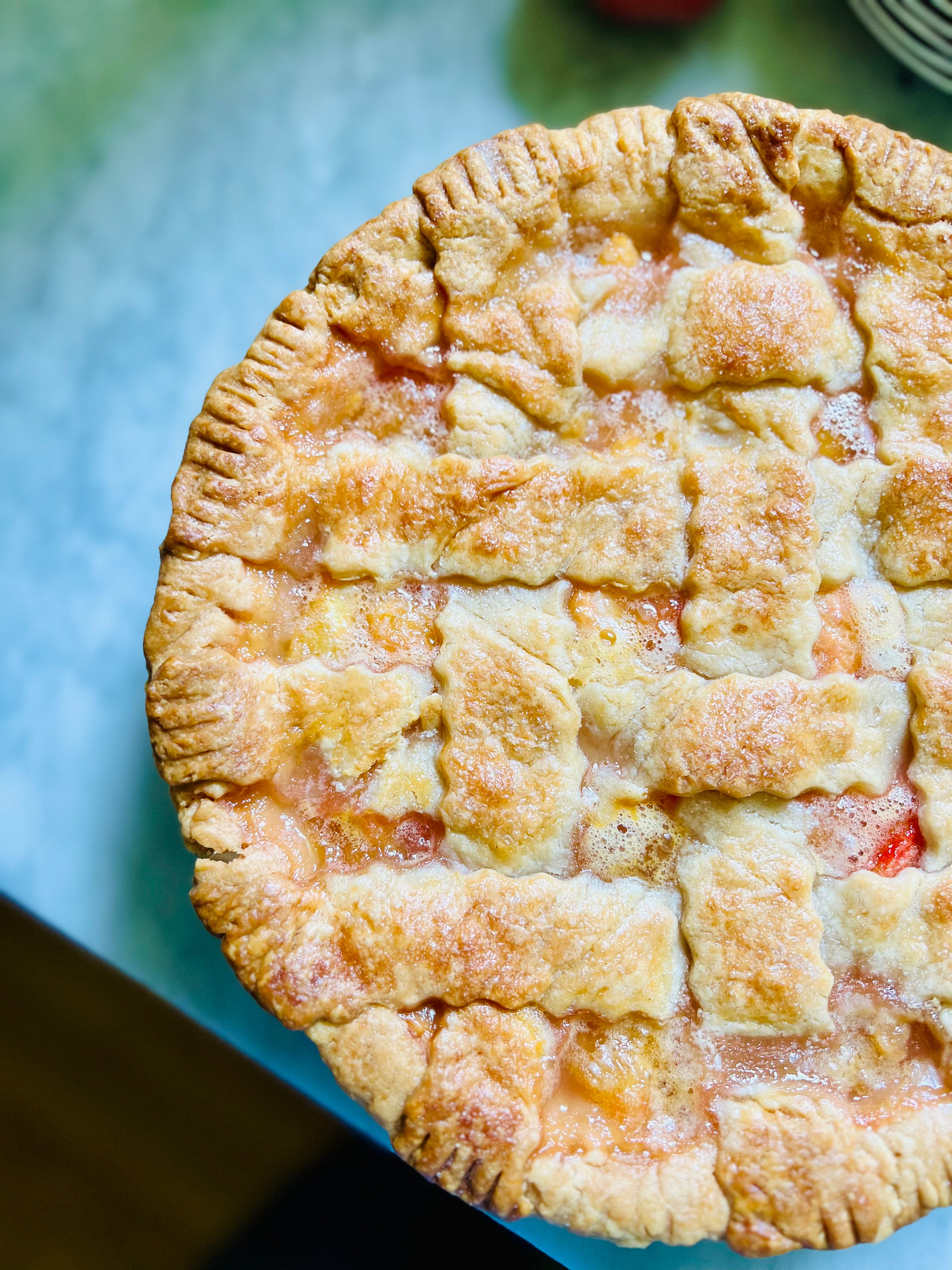
Don’t Miss This Amazing Peach Pie/Cobbler in Southern KitchenIt was the inaugural recipe of a new twice-monthly column called Baking in the American South (that’s a clever title, right?) that I’m writing for Southern Kitchen. It’s known as Ella’s Peach Pie, created by Ella Beesley in Nashville, who was a good friend of my mother’s. What I love about this pie is that if you let it cool, it slices into pie wedges. But if you don’t have the patience to wait, just spoon it into bowls and serve with big scoops of ice cream. Here’s the recipe. I’ve Got Zucchini on the BrainPaid Subscribers, I’m assembling a zucchini-every-whichaway sort of post for next Tuesday. My garden is cranking out zucchini and maybe yours is, too? I’ll be revealing how to make the best zucchini muffins and a mint and garlic-infused grilled zucchini sandwich, just for starters. Do you have a recipe you’d like me to try? Email me - annebyrn615@gmail.com. It’s a very good time to become a Paid Subscriber!
THE RECIPES:
Strawberry Hibiscus TeaI love the versatility of this recipe. I know I can measure out 1/2 cup of dried hibiscus flowers, steep them in boiling water, and I am on my way to making a refreshing summer tea. The amount of sweetness is perfect for me, but if you think it needs to be sweeter, increase the simple syrup to 3/4 cup water and 3/4 cup sugar with the same amount of mint. As for the lime juice, it is up to you. The hibiscus is quite tart, but the lime does make it even more refreshing. Makes 2 quarts (8 cups)
Hibiscus and Pineapple PunchThis recipe is adapted the cookbook Flavor+Us: Cooking for Everyone by Rahanna Bisseret Martinez. It combines pineapple with hibiscus, and they are natural partners. The recipe begins with a whole pineapple, which you wash, peel, and core, and boil the hibiscus with the pineapple peel and core for even more flavor. I took a shortcut and used a 1-pound container of fresh pineapple chunks (not canned). If you like texture in the drink, don’t strain the pineapple after pureeing. Makes 2 quarts (8 cups)
Juneteenth Strawberry LemonadeFrom Nicole Taylor’s book, A Cookbook for Juneteenth and Black Celebrations, is this versatile recipe for strawberry lemonade. I have adapted it slightly. Nicole makes a strawberry powder and stores it in the pantry so she can add fresh lemon juice and water whenever she wants lemonade. I omitted the 1 tablespoon citric acid and 1/4 teaspoon kosher salt from her mix of freeze-dried strawberries and sugar. I also like a less sweet lemonade - she calls for 1 cup sugar and 1/2 cup freeze-dried strawberries. Suit yourself. How much lemon juice you get from fresh lemons varies, and I found a bag of the most wonderful organic lemons at Trader Joe’s, and they yielded just enough juice for this recipe. You can find the freeze-dried strawberries at Trader Joe’s, Whole Foods, Sprouts, or online. Makes 2 quarts (8 cups)
You’re on the free list for Anne Byrn: Between the Layers. If you’re liking what you’re reading, why don’t you become a paying subscriber for more recipes, stories, and content.
|








0 comments:
Post a Comment